



Use IPWeb dynamic datacenter proxies to route high-volume requests through a rotating datacenter proxy pool. Choose automatic IP rotation by request or session for public web data collection, SEO research, price monitoring, QA, and other request-intensive workflows.
 Supports multiple payment channels, Alipay, WeChat.


Automatic IP Rotation
HTTP(S) & SOCKS5 HTTP(S)
High-Concurrency Requests
Volume Pricing Down to $0.90/GB

























Automatic IP Rotation
Rotate datacenter proxy IPs by request or session without maintaining your own proxy server list.

Distributed IP Pool
Distribute requests across a rotating datacenter proxy pool instead of relying on one fixed datacenter IP.

High-Concurrency Access
Run parallel requests for public data workflows, QA systems, SEO research, and recurring automated tasks.

Location & ASN Targeting
Select available countries and cities based on current datacenter proxy inventory and workflow requirements.

Flexible Session Control
Rotate datacenter IPs automatically for new requests, or keep a temporary sticky session when a multi-step workflow needs short-term continuity.

API-Driven Proxy Management
Configure rotating datacenter proxy access in browsers, scripts, crawlers, and other tools that support HTTP, HTTPS, or SOCKS5.
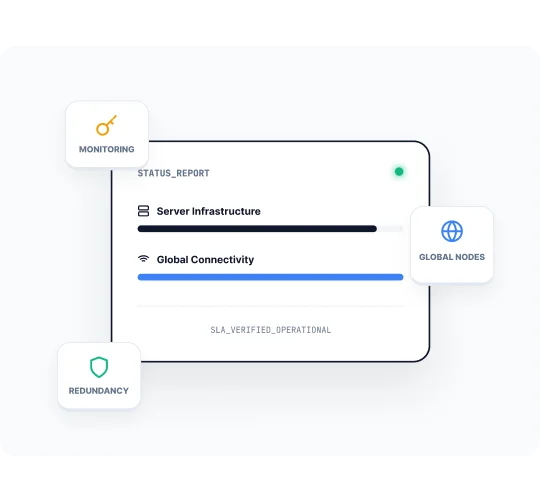
Built for request-intensive workloads with multi-node infrastructure and 99.9% service availability. Actual request performance also depends on the destination, location, request settings, and network conditions.
Choose rotating datacenter proxies when you need an IP pool, automatic rotation, parallel requests, and traffic-based billing. Choose dedicated datacenter proxies when your workflow needs fixed private IPs assigned to one account and billed by IP quantity.
Datacenter proxies change the network route and visible exit IP; they do not override website terms, permissions, account requirements, or legal restrictions. Use them only for authorized workflows and follow applicable data-access policies.

Web Scraping
Use rotating datacenter proxies for high-volume public web data collection, crawling, and recurring scraping workflows where server-hosted IPs are suitable.

SEO & SERP Research
Use a rotating datacenter proxy for repeatable SEO research, SERP checks, page metadata collection, and other permitted search-data workflows.

Price & Market Intelligence
Run recurring price monitoring and market research across public product pages when fast, traffic-efficient datacenter routing fits the target.
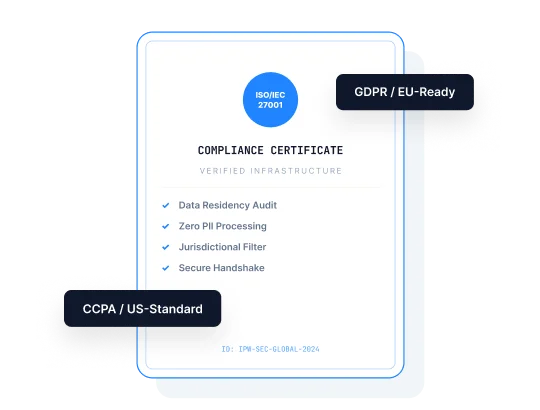
Buy from a provider with a large scale and high moral standards
Do you need more than 1TB of data?
 Exclusive Customer Manager
Concurrency scaling
Stability Guarantee
Scheduling Access Optimization
Long-term Operation Support
Priority Technical Support
SSO Access Control
Log auditing
Exclusive Customer Manager
Concurrency scaling
Stability Guarantee
Scheduling Access Optimization
Long-term Operation Support
Priority Technical Support
SSO Access Control
Log auditing
 Alipay (HK)
 USDT-TRC20
 Corporate Transfer
Quick answers about datacenter IP rotation, sessions, protocols, pricing, and product choice.
What are rotating datacenter proxies?


Rotating datacenter proxies use server-hosted IP addresses that change automatically from a datacenter proxy pool. IPWeb's dynamic datacenter proxy product is designed for fast connections, IP diversity, high-concurrency requests, and traffic-based usage.
How does IP rotation work?
Rotating datacenter proxies change the outgoing datacenter IP according to the request or session setting. You connect through a proxy gateway, which assigns an available IP from the datacenter proxy pool.
Rotating vs dedicated datacenter?
Dynamic or rotating datacenter proxies draw IPs from a pool and use traffic-based billing. Dedicated datacenter proxies provide fixed private IPs assigned to one account and are billed by IP quantity.
Are sticky sessions supported?
Yes. Automatic rotation is the primary mode, but a temporary sticky session can keep the same datacenter IP when a multi-step workflow needs short-term continuity. For a fixed private IP, use dedicated datacenter proxies instead.
Can I run parallel requests?
Yes. Dynamic datacenter proxies are designed for parallel requests and request-intensive workflows. Available throughput depends on the selected plan, destination websites, request settings, and network conditions.
Datacenter or residential proxy?
Datacenter proxies use server-hosted IPs and are usually chosen when speed, cost efficiency, and scalable request volume matter. Residential proxies use residential network IPs and are better when the workflow specifically requires residential network characteristics.