



Route your traffic through real carrier-assigned mobile IPs on 3G, 4G, 5G, and LTE networks. Rotate IPs for each session or maintain a sticky connection for mobile app testing, ad verification, localized content, and authorized social media workflows.
 Supports multiple payment channels, Alipay, WeChat.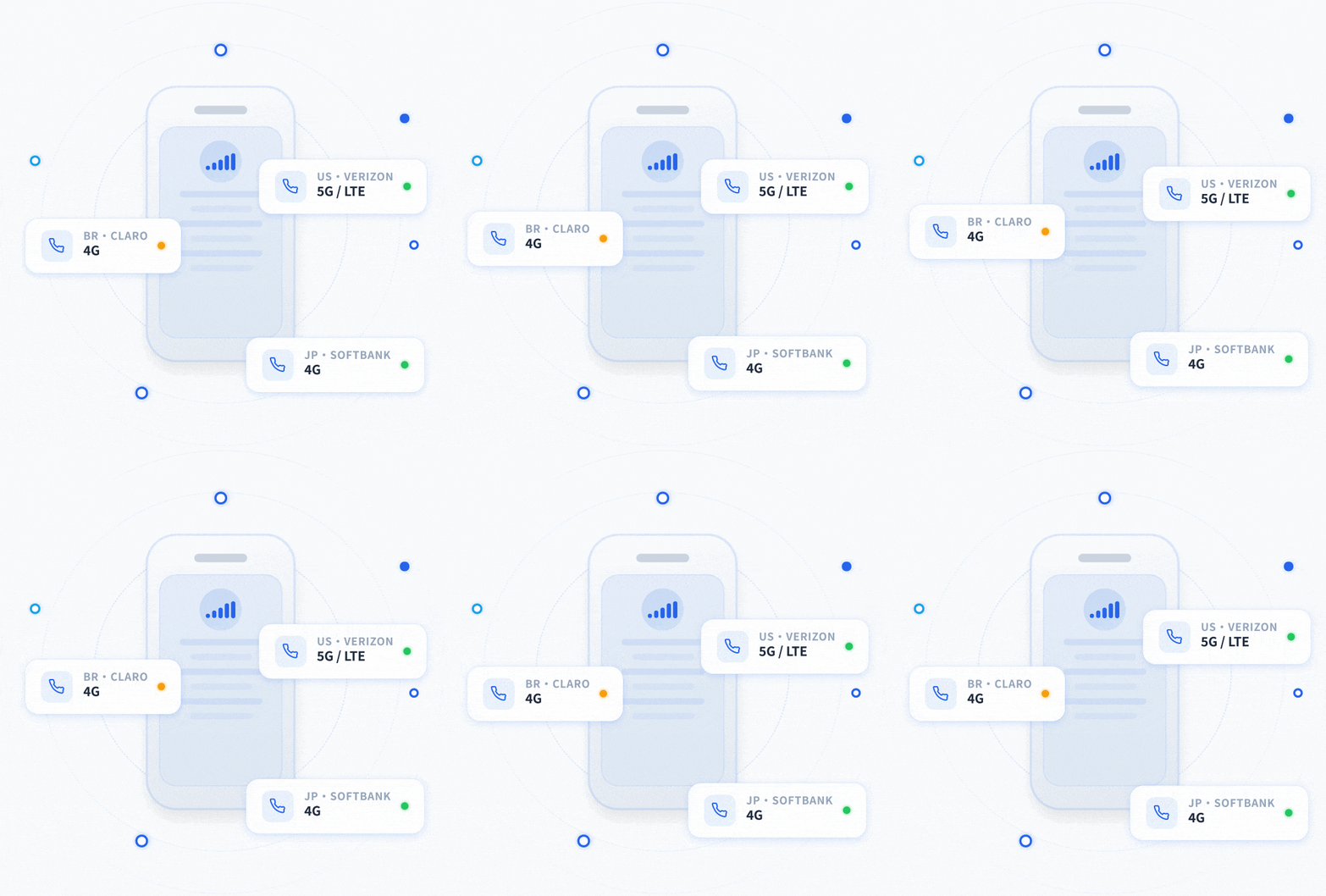


3G / 4G / 5G / LTE Mobile IPs
High Stability
Global Mobile Coverage
Real Carrier IPs
























Buy from a provider with a large scale and high moral standards
Do your business volume exceed TB units?
 TB-level traffic support
Lower traffic unit price
Stable proxy resources
Long-term operation optimization
Enterprise-level SLA
Extensive regional coverage
Usage visualization
Customized proxy solutions
TB-level traffic support
Lower traffic unit price
Stable proxy resources
Long-term operation optimization
Enterprise-level SLA
Extensive regional coverage
Usage visualization
Customized proxy solutions
 Alipay (HK)
 USDT-TRC20
 Corporate Transfer
Access 70M+ mobile IPs across 220 countries through real cellular carrier networks. Select a country, city, region, ASN, or mobile carrier where available for app testing, ad verification, localized checks, and public mobile web research. Browse proxy locations for current availability.
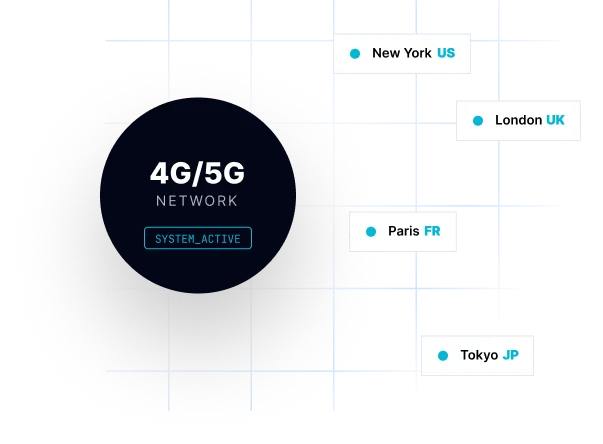

Rotating & Sticky Mobile IPs
Use rotating mobile proxies when you need IP changes between requests or sessions, or keep a sticky mobile IP when continuity matters.

Carrier-Assigned IPs
Route traffic through mobile IP addresses associated with telecom operators and cellular carrier networks.

Real Cellular Networks
Use 3G, 4G, 5G, and LTE carrier networks where available for mobile app testing, ad verification, and localized checks.

Location & Carrier Targeting
Select mobile proxies by country, city, region, ASN, or mobile carrier where available.

HTTP(S) & SOCKS5 Support
Connect through HTTP, HTTPS, or a mobile SOCKS5 proxy endpoint based on the protocol your tool supports.

Traffic-Based Mobile Proxy Plans
Choose traffic-based mobile proxy plans and scale to published volume pricing down to $2.00/GB.

Developer Setup
Choose a programming language and enter the mobile proxy server endpoint and credentials from your account. Use HTTP(S) or SOCKS5 according to your tool, then test the route before scaling.
 Browser Integration
Multi-Language Support
Standard Authentication
Developer Integration Ready
Browser Integration
Multi-Language Support
Standard Authentication
Developer Integration Ready
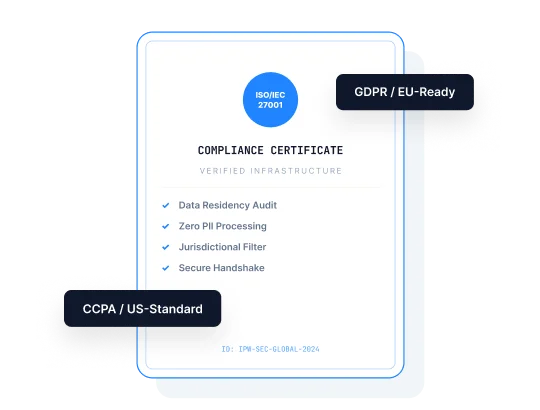
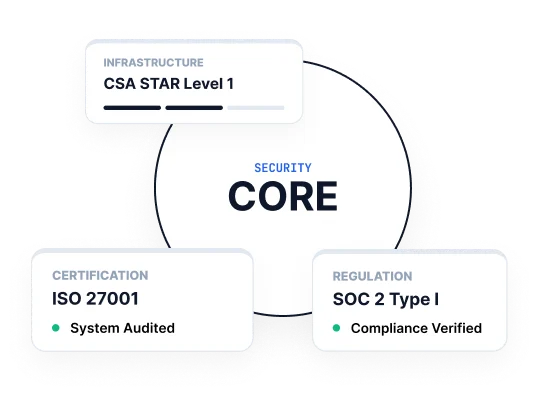
IPWeb applies acceptable-use, privacy, and security controls across its mobile proxy service. Customers remain responsible for applicable laws, contractual requirements, and target-site terms. Review current policies in the IPWeb Trust Center.
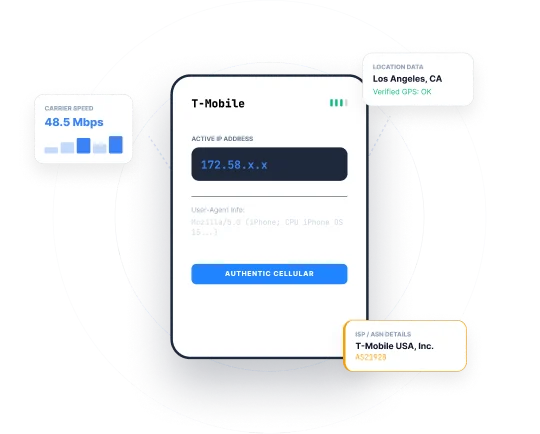
Choose mobile carrier IPs when your workflow needs cellular-network routing rather than residential or datacenter routing. A 4G mobile proxy or LTE proxy fits broad mobile testing and verification, while a 5G proxy is most relevant where the target region and carrier support 5G coverage.
IPWeb supports setup, account configuration, connection troubleshooting, and mobile proxy integration for business workflows. Use technical support when you need help with endpoints, credentials, session settings, location options, or scaling a working configuration.

Mobile App Testing
Test app onboarding, regional features, and network behavior through real mobile carrier IPs on 4G, 5G, and LTE networks.

Mobile Ad Verification
Check mobile ads, redirects, landing pages, and localized campaigns across different countries, regions, and carriers.

Authorized Social Media QA
Teams evaluating mobile proxies for Instagram or TikTok can use carrier IPs for authorized localization, content QA, and mobile ad verification workflows.

App Store Research
Compare app rankings, search visibility, recommendations, and localized store results across mobile markets.

E-commerce Research
Review mobile product pages, regional pricing, promotions, and localized shopping experiences.

Mobile Web Research
Use a rotating mobile proxy network to review publicly available mobile-first pages across supported locations and carrier networks.
Feedback from teams using IPWeb for mobile testing, verification, and recurring data workflows


Our team uses mobile carrier IPs for regional QA, mobile ad verification, and recurring testing workflows. IPWeb gives us a consistent way to configure mobile routes across supported locations and session settings.

Ogilvy
Head of Data Operations


Learn how mobile proxies, carrier IPs, rotating sessions, mobile networks, and pricing work.
What is a mobile proxy?


A mobile proxy server routes internet traffic through an IP address associated with a cellular carrier. Mobile proxies use 3G, 4G, 5G, or LTE networks instead of conventional datacenter infrastructure.
What are 4G LTE mobile proxies?
A 4G mobile proxy routes traffic through a carrier-assigned IP on a 4G or LTE cellular network. A 4G proxy or 4G LTE mobile proxy is useful for app testing, mobile ad verification, localized content checks, and mobile web research.
How do rotating mobile proxies work?
Rotating mobile proxies assign a different mobile proxy IP according to your session settings. You can rotate IPs for new requests or keep a sticky session when a workflow requires continuity.
How do rotating mobile proxies work?
Rotating mobile proxies assign a different mobile proxy IP according to your session settings. You can rotate IPs for new requests or keep a sticky session when a workflow requires continuity.
What is a 5G mobile proxy?
A 5G proxy uses an IP associated with a 5G carrier network. A 5G mobile proxy can help test mobile-first experiences where 5G carrier coverage is available; actual availability and performance depend on the region and carrier.
Mobile proxy vs residential proxy: what is the difference?
A mobile proxy uses an IP associated with a cellular carrier, while a residential proxy uses an IP associated with a residential internet connection. Choose mobile proxies for cellular-network testing and carrier-specific workflows; choose residential proxies for broader residential-network access.
How much do mobile proxies cost?
IPWeb mobile proxy pricing is traffic-based. Published plans range from $4.50/GB on the 5GB package down to $2.00/GB on the 3,000GB package, so the effective mobile proxy price decreases at higher volume tiers.
How do I choose the best mobile proxies?
When comparing mobile proxy providers, check for carrier-assigned IPs, supported 3G/4G/5G/LTE coverage, rotating and sticky session options, location or carrier targeting, HTTP(S) or mobile SOCKS5 proxy support, and pricing that matches your traffic volume.