
API Guides
Explore practical API guides for collecting and using public web and search data. Learn how SERP APIs, rank tracking APIs, and web scraping APIs work, including request parameters, authentication, JSON responses, data validation, costs, errors, and integration workflows.
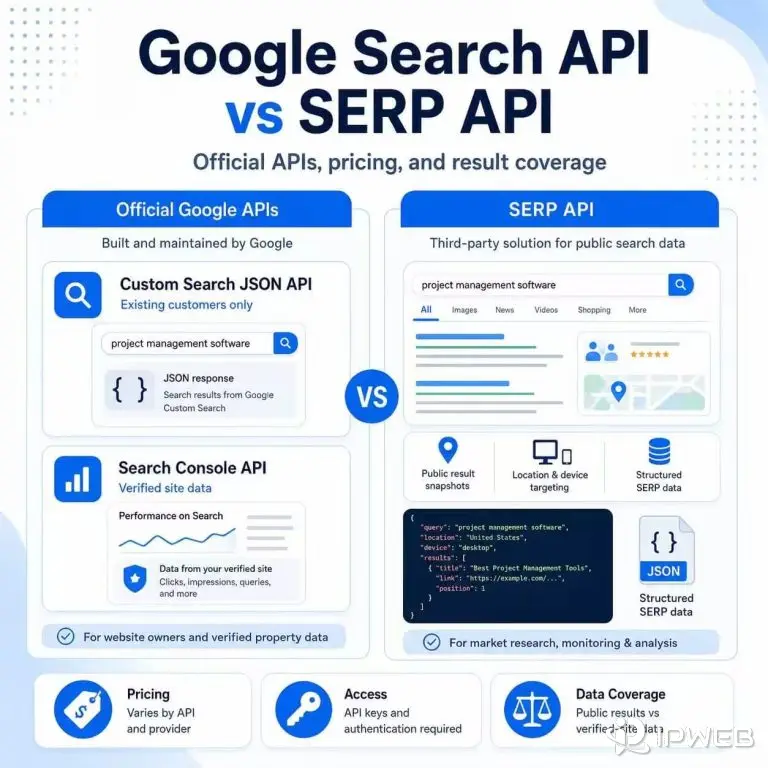
Google Search API vs SERP API: Which to Use
Searching for a “Google Search API” can lead to several different products. You may need search inside a website, performance data for a verified property, or structured snapshots of public Google results. These tools do not return the same data, and choosing the wrong one can create gaps in coverage, pricing, or implementation. There is also an important 2026 change: Google’s Custom Search JSON API is closed to new customers. Existing customers have until January 1, 2027 to move to another solution. That makes the intended data source—not the broad keyword “Google Search API”—the correct starting point for a new...
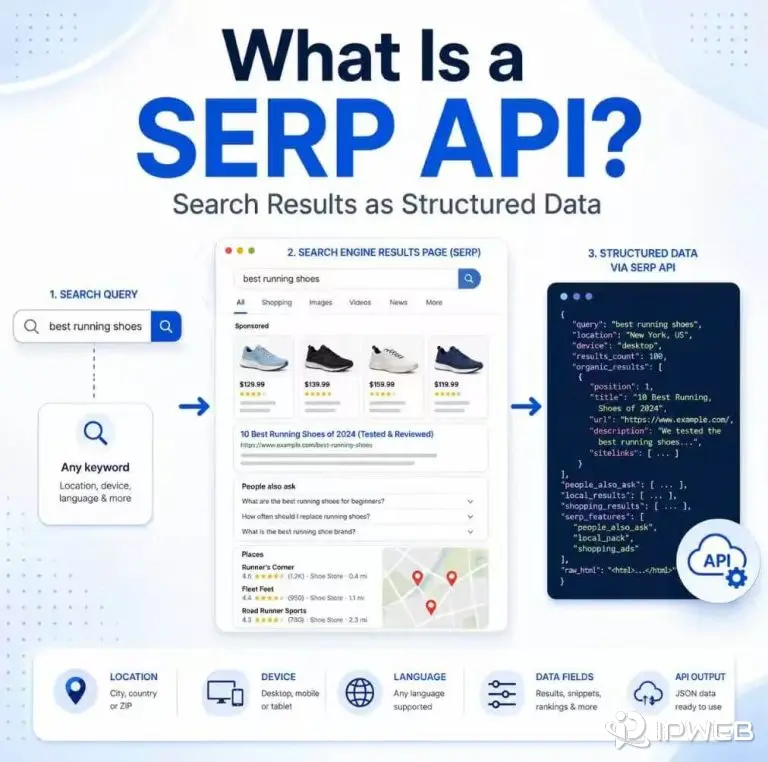
What Is a SERP API?
SERP data looks simple from a browser: type a query, get a search results page, read the links. At workflow scale, it becomes harder. Results can vary by country, language, device, location, personalization signals, search features, ads, local packs, and freshness. A SERP API exists to make that search-result collection process more predictable for applications. Direct AnswerA SERP API is an interface that returns structured search engine results for a query, location, language, device, or search type. It can help with SEO monitoring, AI grounding, market research, and regional QA, but it does not guarantee ranking accuracy, remove search-engine policy...