
API Guides
Explore practical API guides for collecting and using public web and search data. Learn how SERP APIs, rank tracking APIs, and web scraping APIs work, including request parameters, authentication, JSON responses, data validation, costs, errors, and integration workflows.
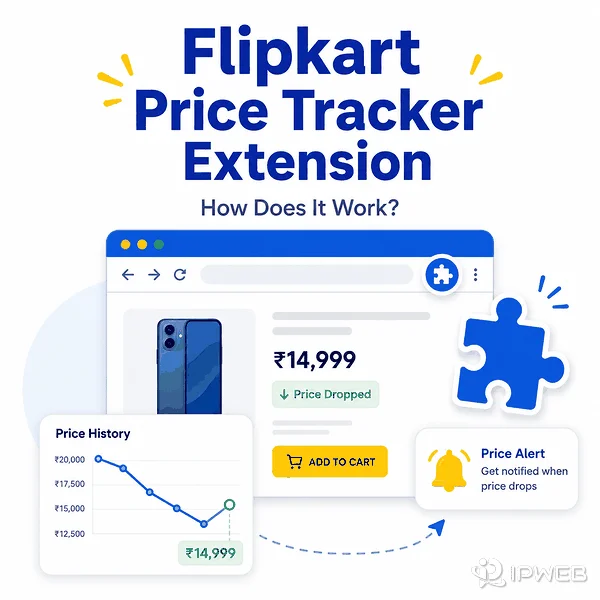
How Does Flipkart Price Tracker Extension Work?
A Flipkart price tracker extension adds price-history or tracking controls to the browser while you shop. It can make a quick price check easier, but the graph is only useful when the extension is reading the correct product, variant, seller, and offer state. Direct Answer A Flipkart price tracker extension usually identifies the product page you are viewing, reads or sends product details to its tracking service, and returns stored price history, a price graph, or an alert option. Before installing one, check the publisher, update history, permissions, privacy disclosure, supported Flipkart pages, and how the tool handles variants, sellers,...
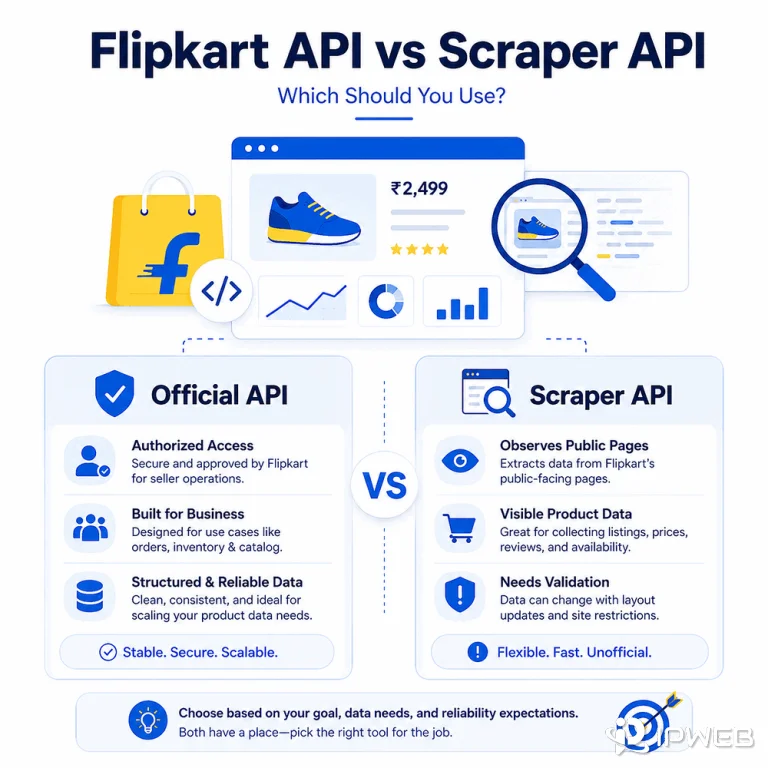
Flipkart API vs Scraper API: Which Should You Use?
Choosing a Flipkart data source depends on what you need to measure. Seller operations, catalog enrichment, price monitoring, availability checks, and competitive research do not all belong in the same API bucket. Direct Answer Use an official Flipkart API when you are an authorized seller or partner working with supported marketplace operations. A third-party data API or scraper API fits a different job. Use one only when the workflow is allowed, the source rules are respected, and the returned product, seller, price, availability, and timestamp fields can be validated. Key Takeaways The term “Flipkart API” can refer to official seller...
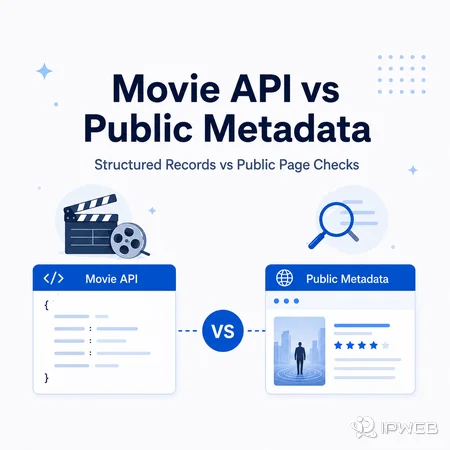
Movie API vs Public Movie Metadata: Which Should You Use?
A catalog team can have a clean movie record in an API and still see a different title, rating, artwork, or listing state on a public storefront. That is why movie API data and public movie metadata should not be treated as interchangeable sources. Use the API as the structured record. Use public-page checks when the page itself matters—for example, regional catalog QA, localized presentation, or confirming a recent listing change. Direct Answer Use a movie API when you need documented, structured fields for application integration or catalog enrichment. Use public movie metadata checks when you need to verify what...
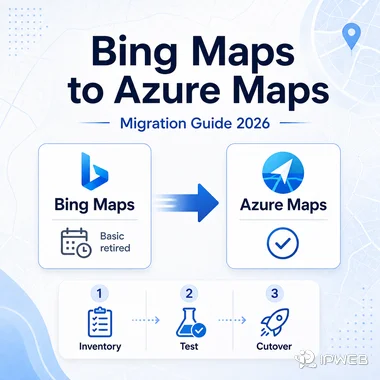
Bing Maps API Migration to Azure Maps in 2026
Bing Maps for Enterprise is already in its retirement window. Free Basic-account access has been retired, and existing Enterprise customers can continue using Bing Maps for Enterprise services only until June 30, 2028. Any application that still depends on Bing Maps REST APIs, the Web Control SDK, or related services needs a migration plan before that deadline. The difficult part is not choosing a new product name. Azure Maps covers many of the same mapping and geospatial jobs, but request formats, authentication, coordinate order, SDK behavior, and response schemas can differ. A safe migration starts by identifying exactly what the...
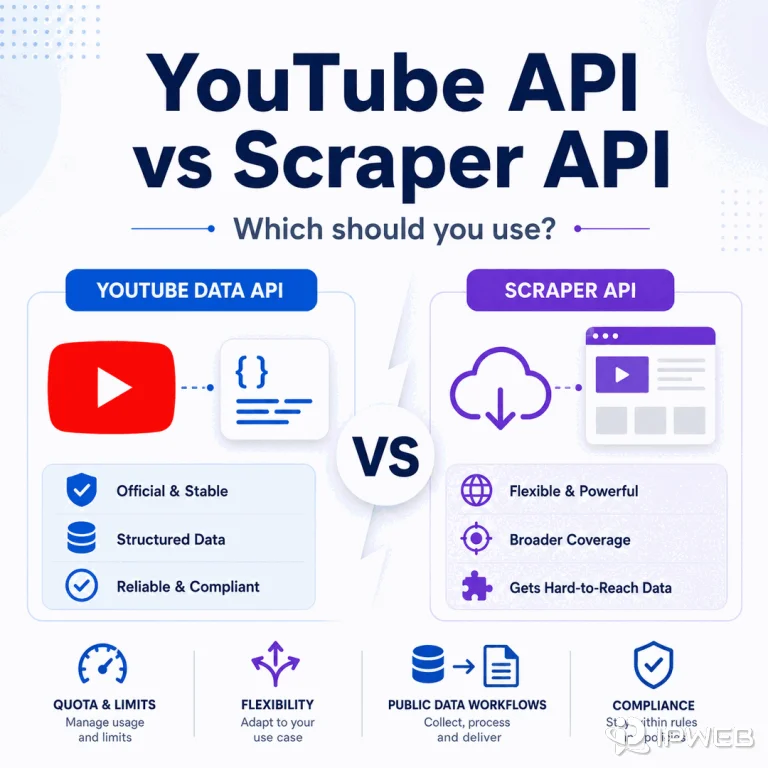
YouTube API vs Scraper API: Which Is Better for Your Workflow?
When a team says it needs YouTube data, the next question is not "Which script should we run?" It is "Which source is the right source for this job?" A reporting dashboard, transcript enrichment task, public video monitor, and search-result research workflow can all need different levels of structure, quota control, and validation. The safest starting point is the YouTube Data API. A scraper API or custom Python workflow may fit when the job needs browser-level collection, public page checks, or a workflow that the official API does not model well. The decision should be based on data type, permission,...
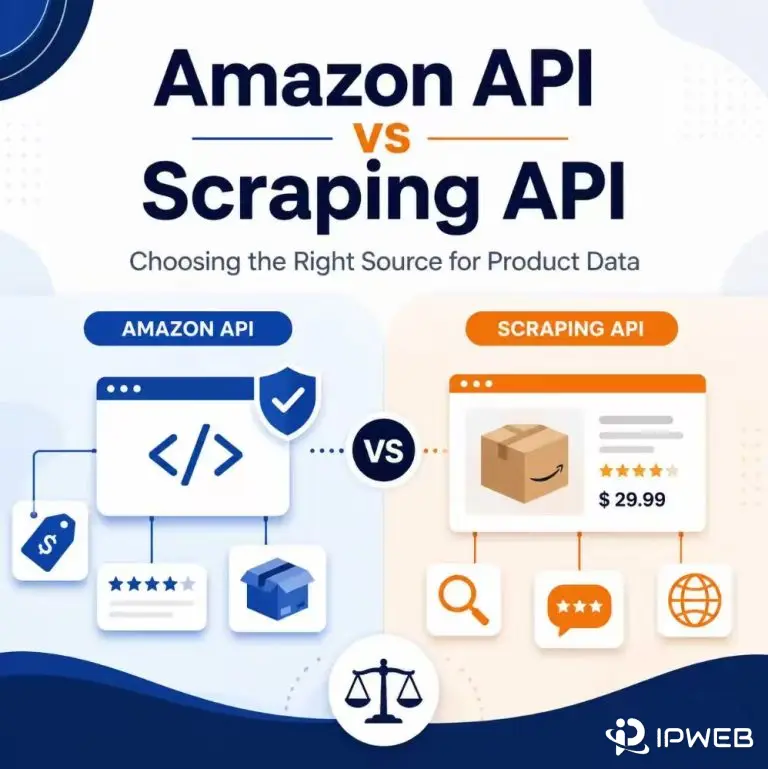
Amazon Product API vs Scraping API for Product Data
"Amazon Product API" is a broad search phrase rather than the name of one current Amazon interface. Amazon product data may come from the Creators API, Selling Partner API (SP-API), approved feeds, permitted public-page checks, or manual validation. The right source depends on who is requesting the data, which fields are needed, and what the data will support. Direct Answer Use the Amazon Creators API for approved affiliate and publisher product-discovery workflows. Use SP-API for authorized seller or vendor catalog, pricing, and customer-feedback operations. Use a scraping API only for permitted public-page validation when the official interface does not provide...
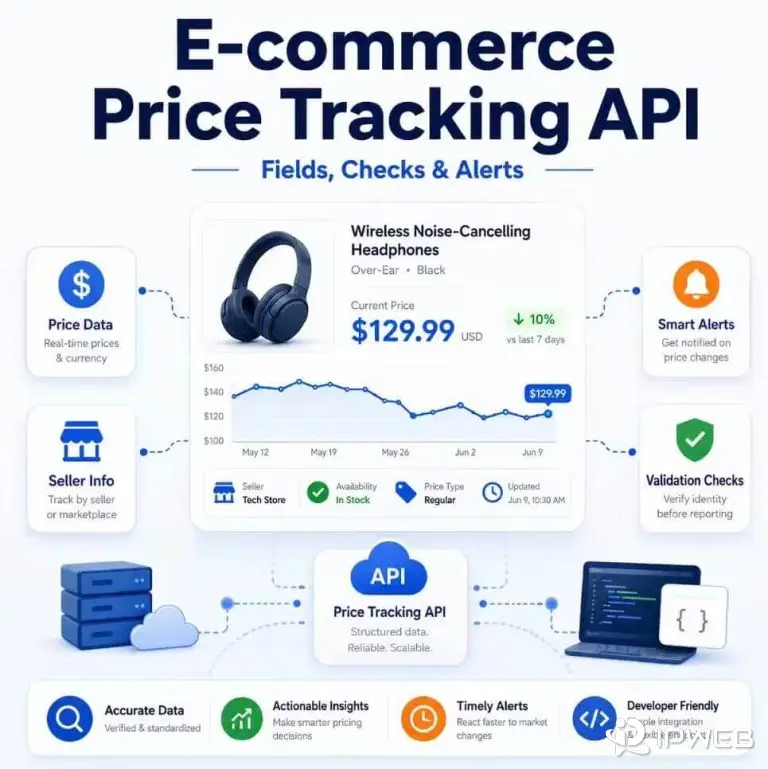
E-commerce Price Tracking API: What to Check
Price tracking sounds simple until the same product has multiple sellers, variants, discounts, shipping rules, currency formats, coupon states, and regional availability. A useful price tracking API does more than return a number. It preserves enough context to explain exactly what was observed. Direct Answer An e-commerce price tracking API should return product identity, canonical URL, price, currency, seller, availability, shipping context, promotion state, timestamp, and source metadata. Reliable tracking also requires validating that each price belongs to the correct product variant, seller, region, and page state. Key Takeaways A price without product, seller, region, currency, and timestamp context is...
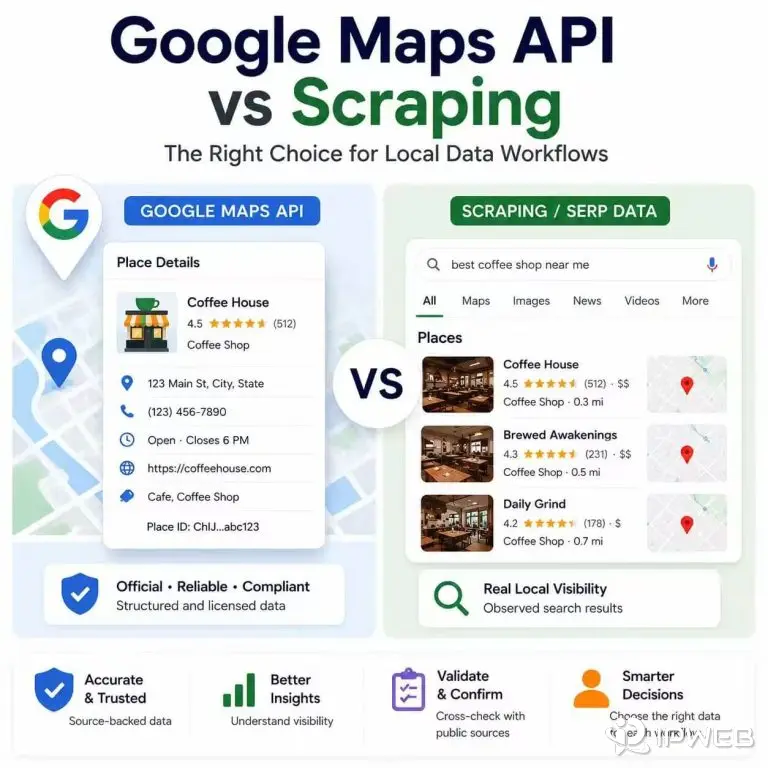
Google Maps API vs Scraping: Which Should You Use?
Local data projects often begin with a simple request: find businesses, verify addresses, compare listings, or track local search visibility. The difficult part is choosing the right source. Google Maps Platform APIs, local SERP data, public business pages, and manual checks can all support local-data work, but they answer different questions. Direct Answer Use Google Maps Platform APIs when you need documented place, geocoding, routing, autocomplete, or map functions inside an application. Use local SERP data when you need to observe how local results appear for a specific query, location, language, or device. Use public-page checks only for permitted validation...
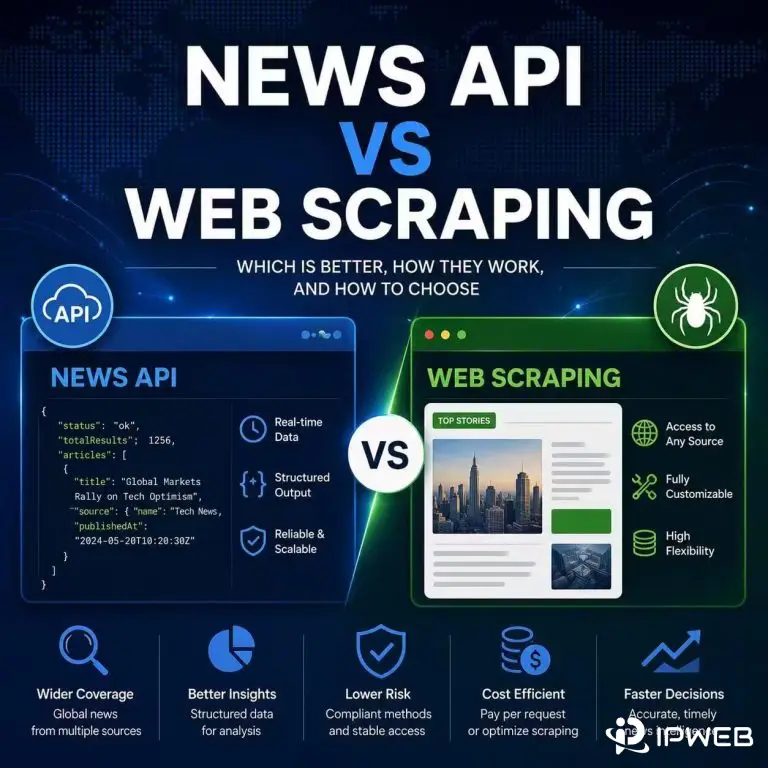
News API vs Web Scraping: Which Should You Use?
News data can support brand monitoring, market research, event alerts, competitive analysis, and AI summaries. The difficult part is not collecting more records. It is choosing a source that provides the coverage, context, freshness, and usage rights your workflow actually needs. Direct Answer Choose a news API when you need structured records, predictable request handling, and broad source coverage with less maintenance. Choose web scraping when permitted public pages contain niche sources, page-level context, or fields the API does not provide. RSS feeds and licensed datasets may be better when the publisher already offers an official feed or when licensing...
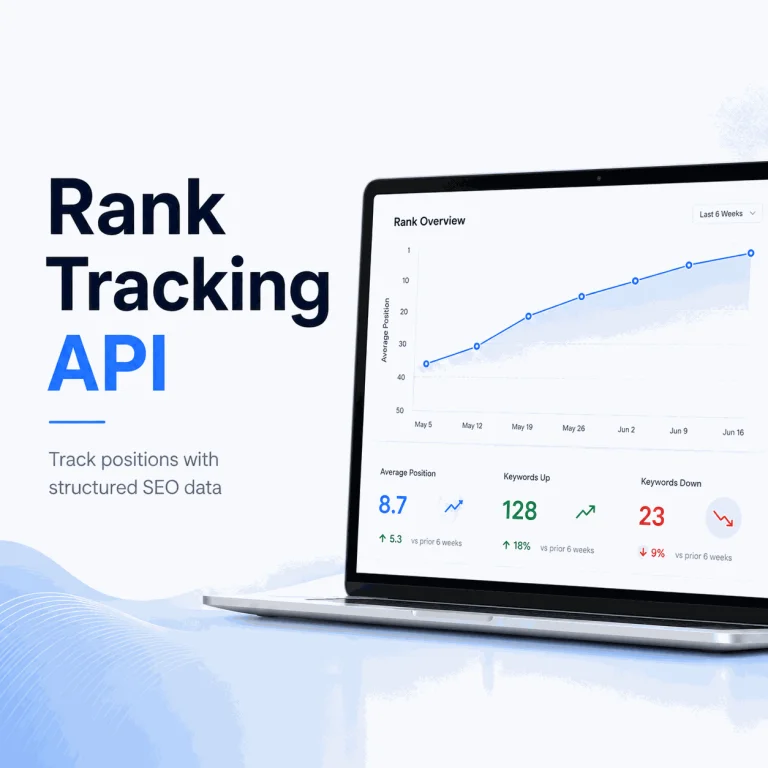
Rank Tracking API: Workflow, Data, and Validation
Rank tracking becomes messy when teams move beyond a few manual keyword checks. One person may search from a desktop in one city, another from a phone in another country, and a reporting system may need the same queries every day. A rank tracking API gives teams a repeatable way to collect and compare ranking snapshots. Direct AnswerA rank tracking API is an interface for collecting keyword position data on a schedule. It sends configured search queries, locations, languages, devices, and search engines to a ranking data provider, then returns structured results that can be stored, compared, and reported over...
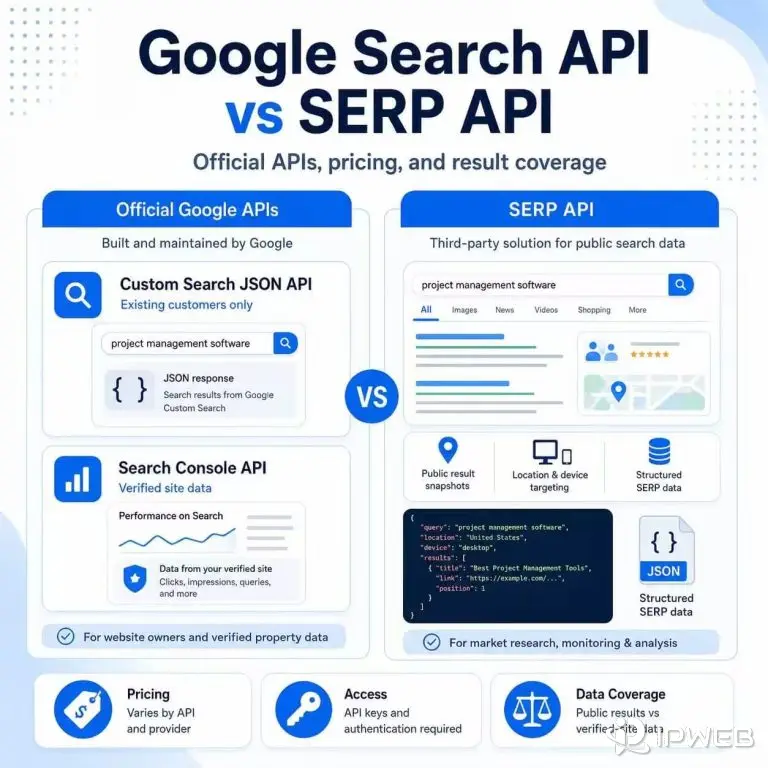
Google Search API vs SERP API: Which to Use
Searching for a “Google Search API” can lead to several different products. You may need search inside a website, performance data for a verified property, or structured snapshots of public Google results. These tools do not return the same data, and choosing the wrong one can create gaps in coverage, pricing, or implementation. There is also an important 2026 change: Google’s Custom Search JSON API is closed to new customers. Existing customers have until January 1, 2027 to move to another solution. That makes the intended data source—not the broad keyword “Google Search API”—the correct starting point for a new...
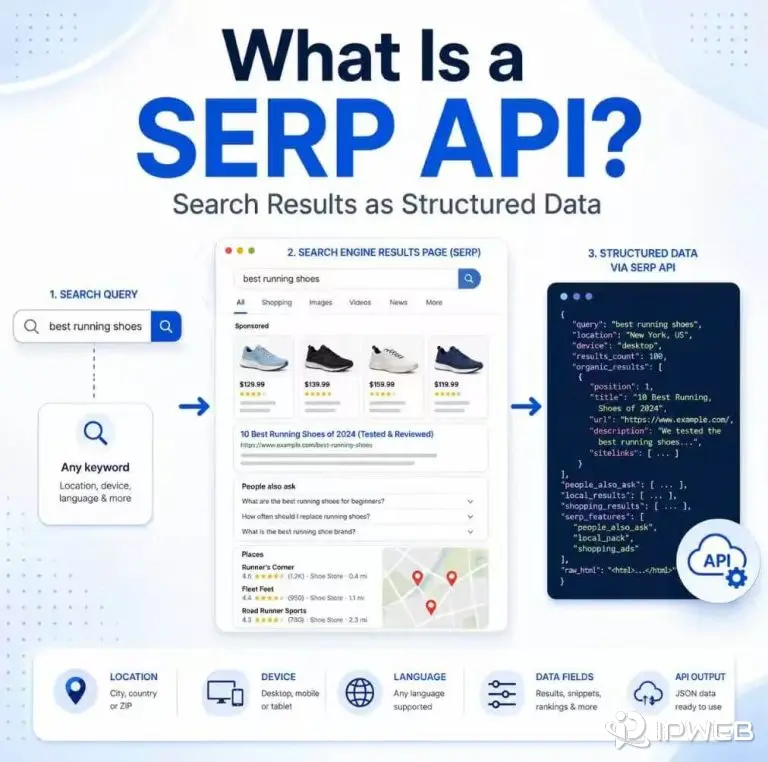
What Is a SERP API?
SERP data looks simple from a browser: type a query, get a search results page, read the links. At workflow scale, it becomes harder. Results can vary by country, language, device, location, personalization signals, search features, ads, local packs, and freshness. A SERP API exists to make that search-result collection process more predictable for applications. Direct AnswerA SERP API is an interface that returns structured search engine results for a query, location, language, device, or search type. It can help with SEO monitoring, AI grounding, market research, and regional QA, but it does not guarantee ranking accuracy, remove search-engine policy...