
AI Data
This category includes content about AI data access, LLM integration, and structured web data used for building intelligent systems and AI applications.
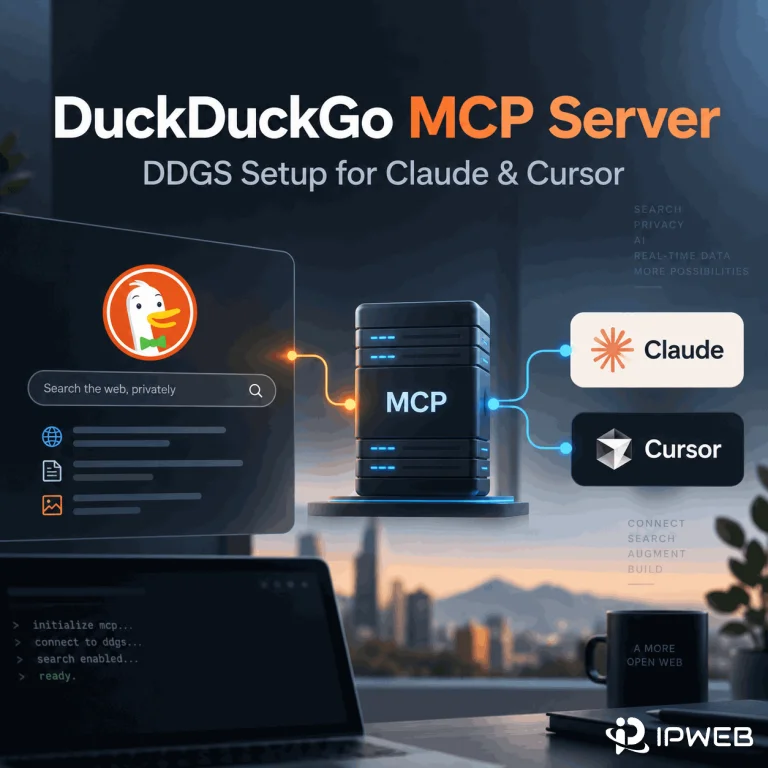
How to Use DuckDuckGo Search with an MCP Server
Searching for a DuckDuckGo MCP server can lead to several different projects and an easy misunderstanding: DuckDuckGo does not currently document an official MCP server for its search engine. The most reproducible setup today is the third-party ddgs package, which includes its own MCP server and can use DuckDuckGo as one of several search backends. This guide shows how to install the DDGS MCP server, connect it to MCP clients such as Claude Desktop or Cursor, use DuckDuckGo as your search backend, and resolve common local setup failures. Quick Answer You can expose DuckDuckGo-backed search to an MCP client by...
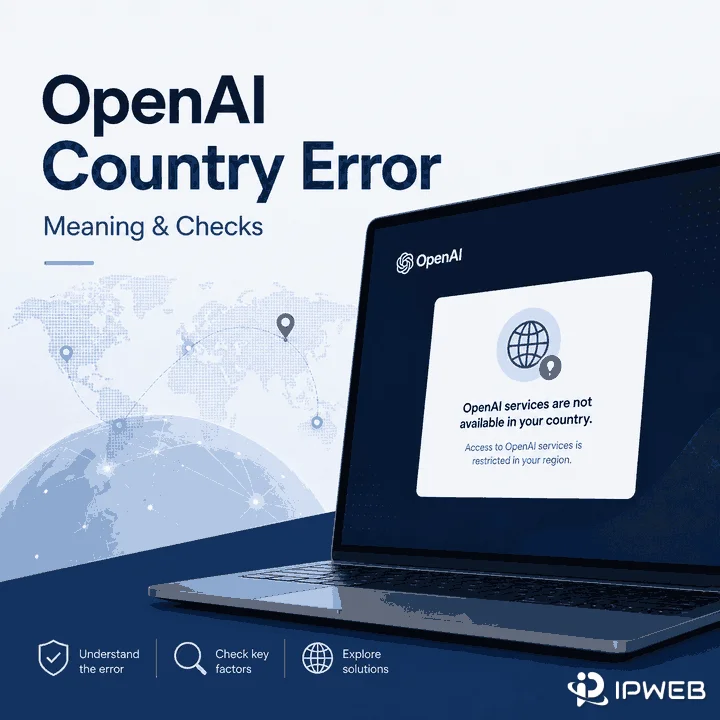
Why Are OpenAI Services Not Available in Your Country?
Many users encounter the “OpenAI services are not available in your country” warning when signing up, creating an API key, or trying to access ChatGPT. The message looks like a simple location error, but the correct next step depends on where it appears and what the account or network is actually doing. Before changing browser settings or network routes, record the exact wording and identify the workflow that failed. An explicit unsupported-country error, a country-detection failure, a normal login problem, and an API authorization error are not the same condition. Quick Answer “OpenAI services are not available in your country”...

ChatGPT in China: Availability & Login Issues
If you are asking “Can I use ChatGPT in China?”, check official availability before trying browser or network fixes. Mainland China is not currently listed among OpenAI's supported countries and territories for ChatGPT. That does not mean every China-related failure looks the same. One person may see an unsupported-country warning, another may reach ChatGPT but get stuck during sign-in, and another may see only a loading or network error. Those symptoms point to different layers and should not be diagnosed as the same problem. Quick Answer Mainland China is not currently on OpenAI's ChatGPT supported-country list. OpenAI also states that...
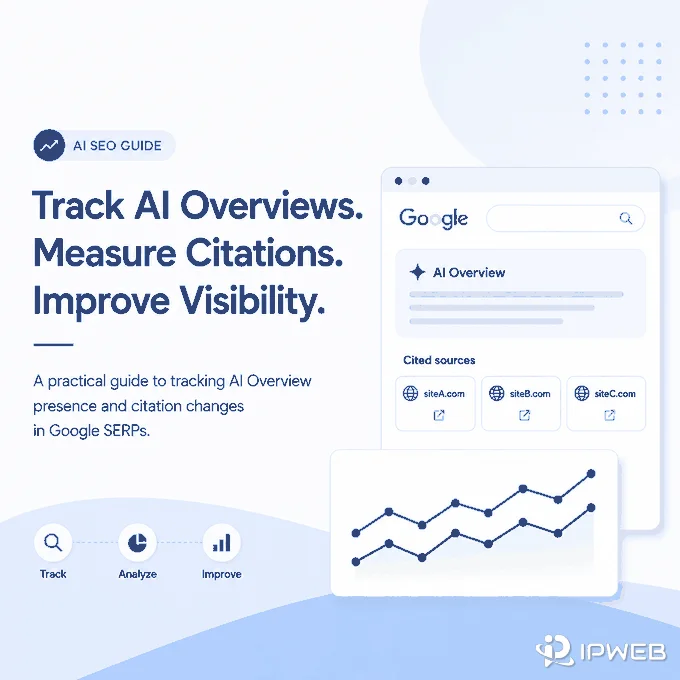
How to Track Google AI Overviews with SERP Data
Google AI Overviews can appear, disappear, or cite different sources even when the search query stays the same. A single SERP capture shows one moment, but it does not show whether the result is stable or how citation visibility changes over time. Useful AI Overview tracking focuses on observable search data: the exact query, country, language, device, timestamp, AI Overview presence, cited URLs, and surrounding organic results. Keeping those conditions consistent makes repeated captures easier to compare without treating a visible citation as proof of Google's selection logic. Direct Answer AI Overview tracking means checking whether Google shows an AI...
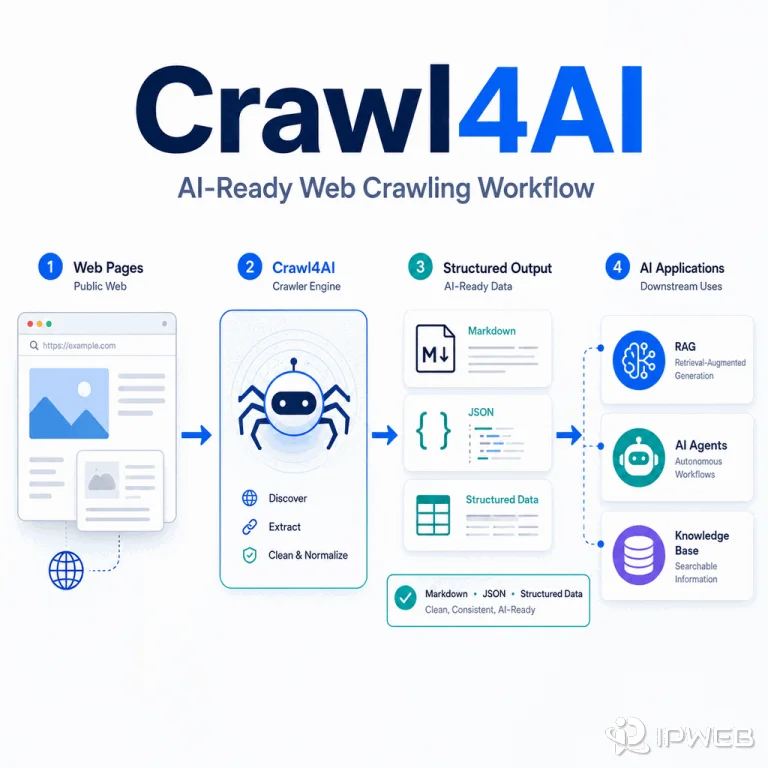
What Is Crawl4AI? How It Works and When to Use It
Crawl4AI is an open-source Python crawler and scraper built for AI-oriented web data workflows. It uses browser automation to load pages and can return clean Markdown, HTML, or structured content for LLM, RAG, agent, and knowledge-base pipelines. The practical question is not whether Crawl4AI replaces every crawler. It is whether your workflow benefits from an AI web scraper that combines page rendering, content cleanup, and extraction in one Python tool. Direct AnswerCrawl4AI is an open-source Python tool for crawling pages and preparing web content for AI systems. It can render JavaScript, generate clean Markdown, and extract structured fields with CSS,...
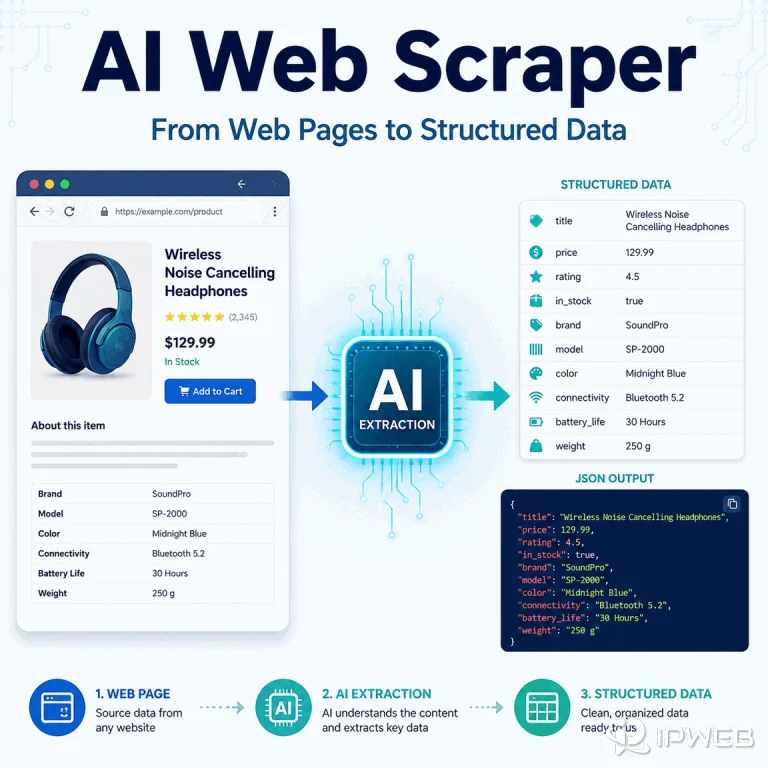
What Is an AI Web Scraper?
An AI web scraper is a web extraction tool that uses AI to understand page content, identify fields, handle layout variation, or convert pages into structured data with less hand-written parsing logic. It still needs normal web scraping fundamentals: permitted sources, stable requests, rendering checks, schema validation, and error handling. The term can be confusing because people use it for several related workflows: a scraper with an LLM extraction step, a browser automation tool controlled by an AI agent, a no-code extraction product with AI field detection, or a pipeline that turns HTML into Markdown or JSON for AI systems....
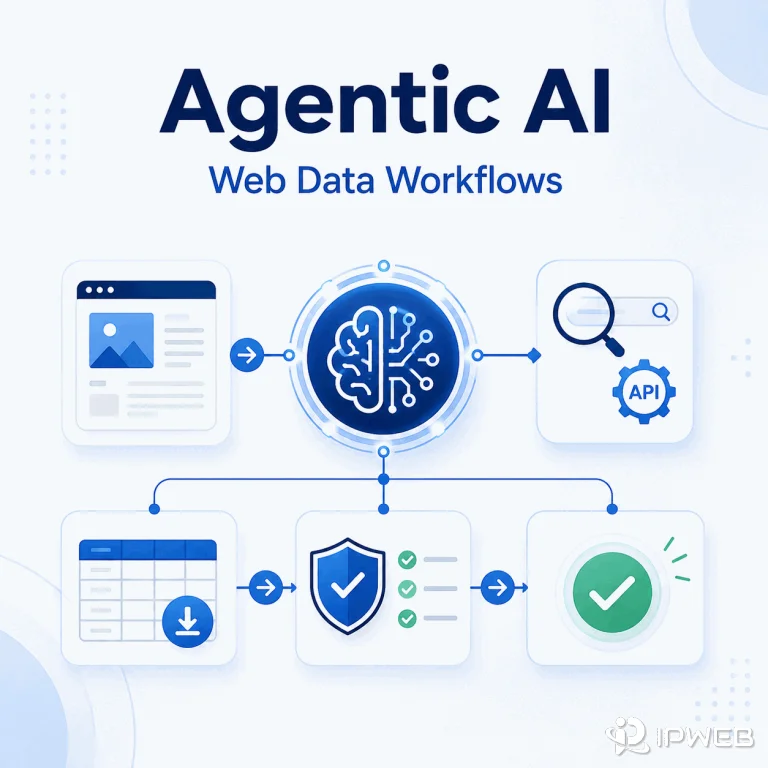
What Is Agentic AI? Web Data Workflow Guide
Agentic AI is an AI system that can plan a task, choose tools, take intermediate actions, evaluate results, and continue until it reaches a defined goal. In web data workflows, an AI agent may call a search API, open a browser, extract visible page content, compare sources, validate structured records, or route a request through an approved network path. The useful question is not only "What is agentic AI?" It is also "What does an agent need before it can act safely on live web information?" The answer is a controlled workflow with clear goals, tool boundaries, fresh data, validation...
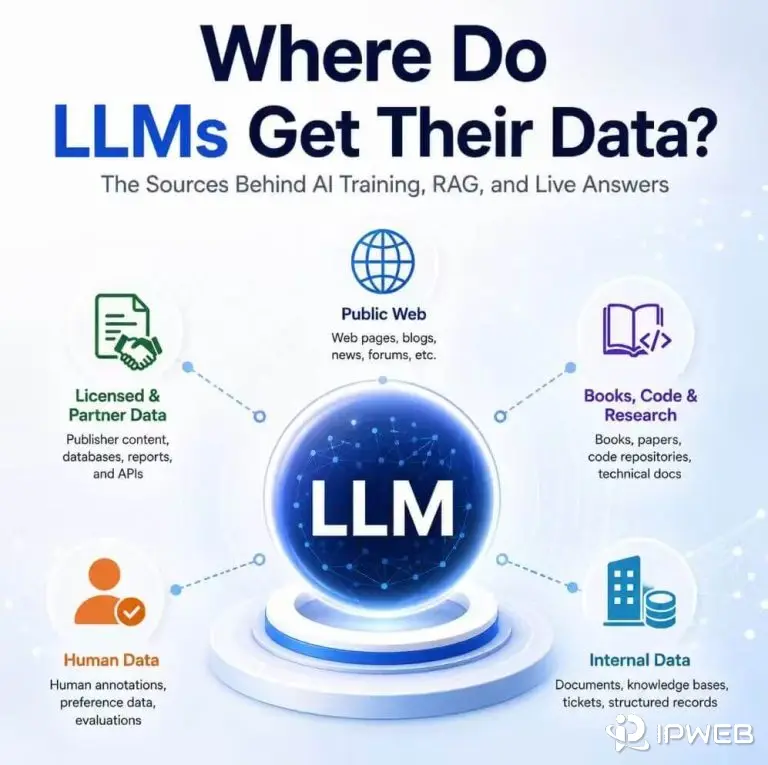
Where Do LLMs Get Their Data? Training Sources Explained
When people ask where large language models get their data, they may be referring to several different processes. A foundation model learns broad language patterns during pretraining, an assistant is refined during post-training, a RAG application retrieves documents at request time, and some products can use search or browsing tools to access current information. These mechanisms are related, but they are not interchangeable. A document retrieved by a RAG system is not automatically added to the model's training data, and a model that can browse the web is not continuously retraining itself on every page it opens. Quick Answer LLM...
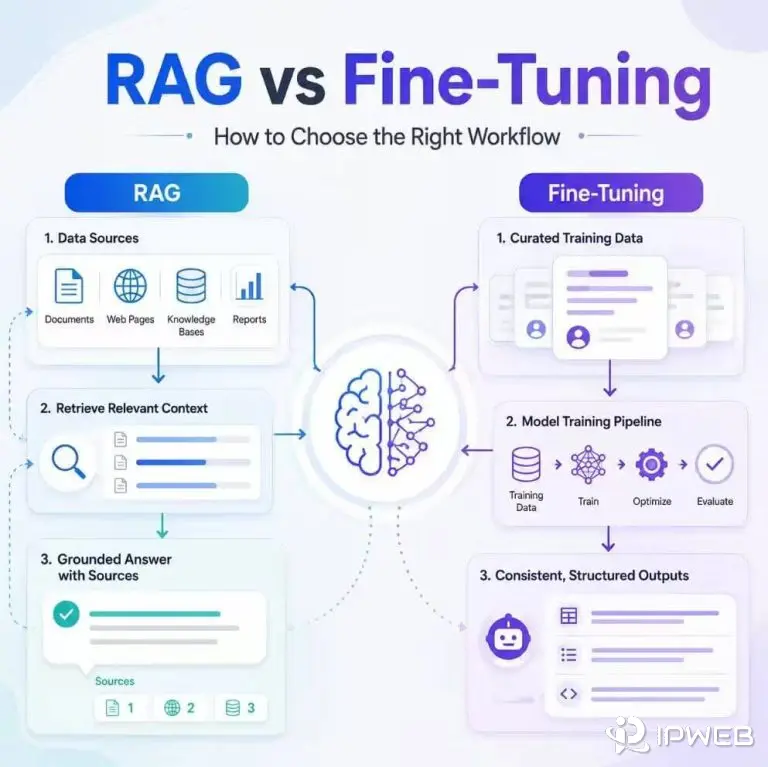
RAG vs Fine-Tuning: Choosing a Web Data Workflow
Choosing between retrieval-augmented generation and fine-tuning is not simply a choice between two model techniques. It is a decision about where knowledge should live, how quickly it must change, whether answers need traceable sources, and what type of data your team can maintain. For web data projects, this distinction matters even more. Product pages, news, search results, policies, and market data can change frequently. A model may also need to classify records, follow a fixed schema, or produce consistent outputs. Those requirements point to different workflows. Direct Answer Choose RAG when the system needs current or source-grounded information. Choose fine-tuning...
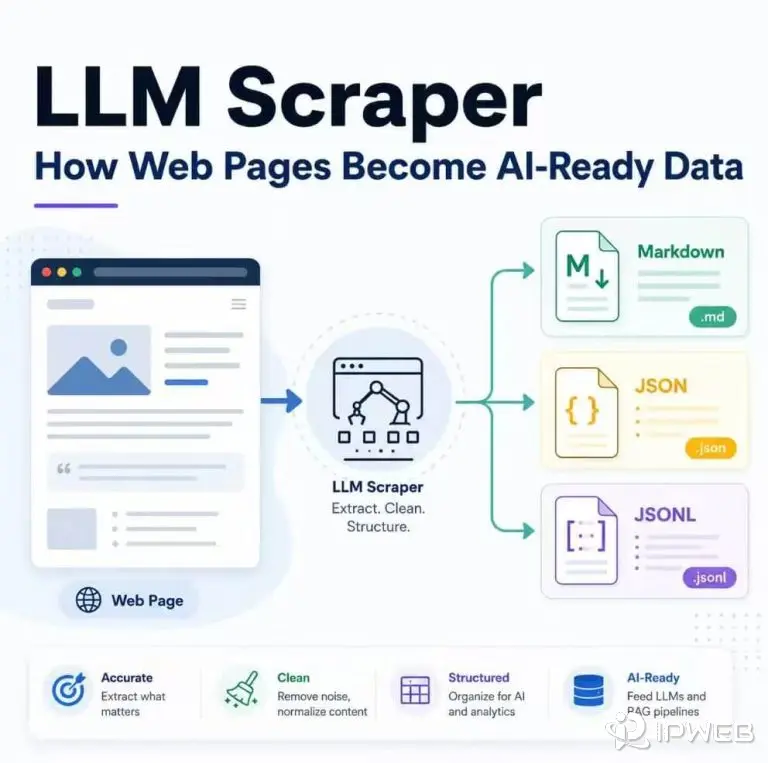
LLM Scraper: How Web Pages Become AI-Ready Data
Raw web pages are rarely ready for retrieval-augmented generation, structured extraction, or model evaluation. Navigation, cookie banners, repeated templates, JavaScript-loaded content, missing metadata, and inconsistent page structures all create noise before the content reaches an AI system. An LLM scraper addresses that gap. The term is informal rather than a standardized protocol, and it commonly describes either an LLM-powered extraction tool or a web-content pipeline that prepares source-grounded data for downstream large language model applications. Direct Answer An LLM scraper collects web content and transforms it into cleaner, structured input for AI workflows. Some implementations use an LLM to identify...
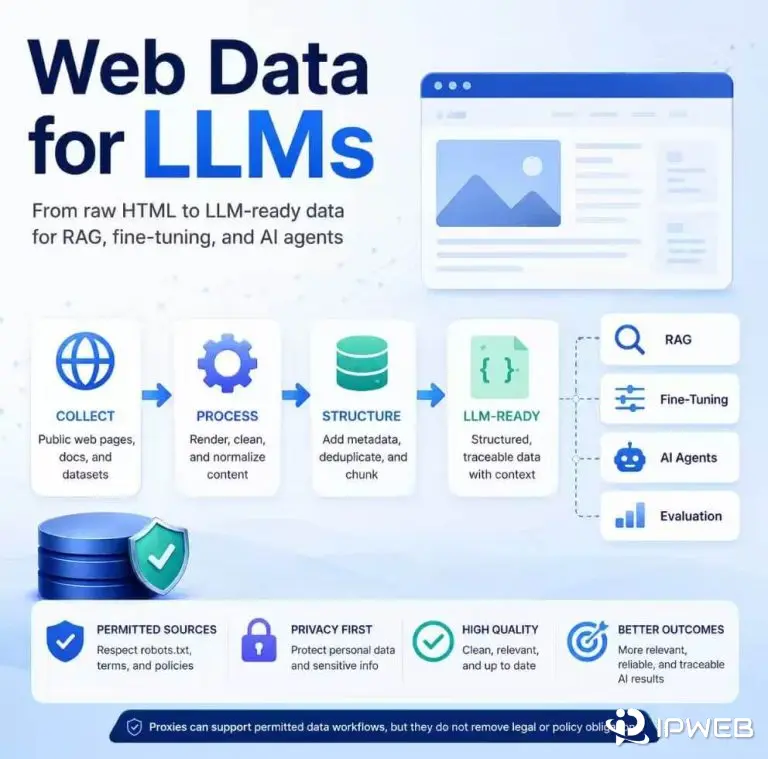
How Web Content Feeds RAG and AI Models
LLMs do not become useful for current business questions just because someone gives them a pile of web pages. Raw HTML is noisy. Search results change. JavaScript pages may hide the content until a browser renders them. Documents need metadata, deduplication, chunking, and refresh rules before they can support a reliable AI workflow. This guide explains what LLM data means, how public web content becomes AI-ready, how RAG differs from fine-tuning, and what to check before using an LLM scraper or web data platform. Direct Answer LLM data is the text, metadata, documents, examples, and structured records used to train,...
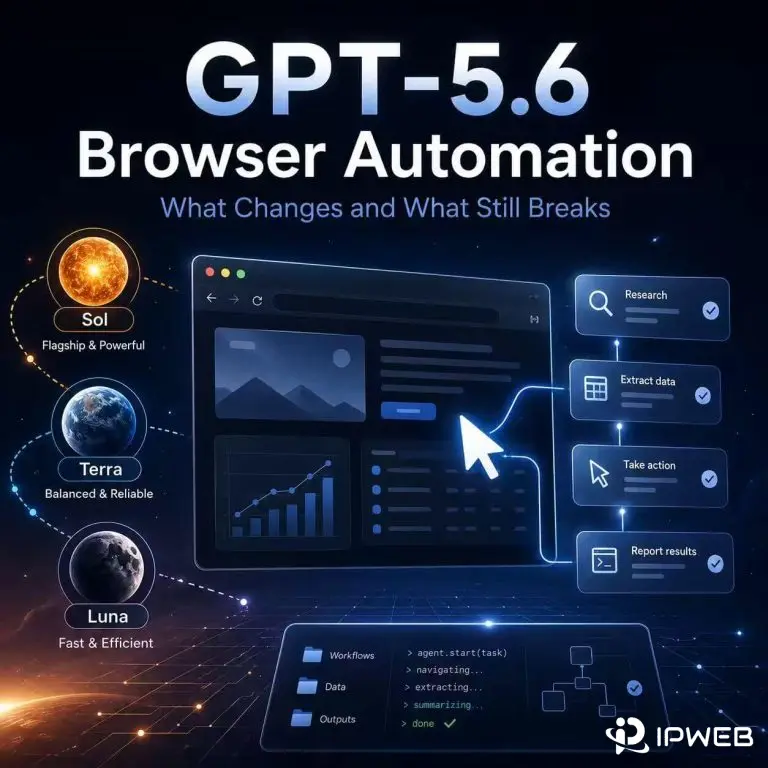
GPT-5.6 Can Control Browsers Now—So Why Do AI Agents Still Fail?
A GPT-5.6 browser agent can inspect a page, choose the right action, and work through a multi-step task. It can still fail for reasons that have almost nothing to do with intelligence. The page may load too slowly. The login session may expire halfway through the task. A regional version of the website may display a different button, price, or currency. The agent may retry a form submission that already succeeded and create a duplicate entry. The model can make the correct decision and the workflow can still break. That is the more important story behind GPT-5.6 computer use. OpenAI...