
Knowledge Popularization
Learn proxy fundamentals including residential, ISP and datacenter IPs, setup methods and real-world usage scenarios.
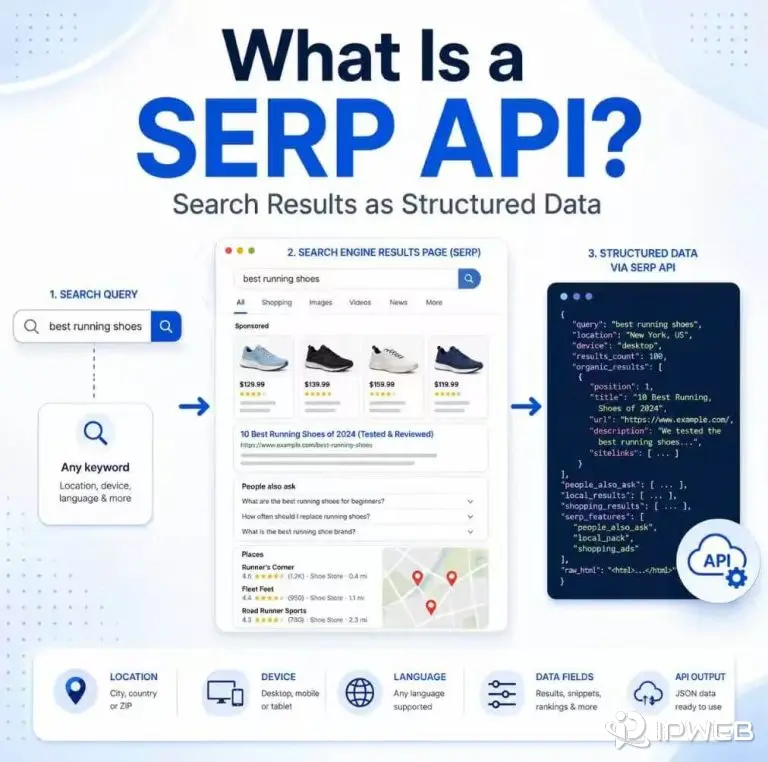
What Is a SERP API?
SERP data looks simple from a browser: type a query, get a search results page, read the links. At workflow scale, it becomes harder. Results can vary by country, language, device, location, personalization signals, search features, ads, local packs, and freshness. A SERP API exists to make that search-result collection process more predictable for applications. Direct AnswerA SERP API is an interface that returns structured search engine results for a query, location, language, device, or search type. It can help with SEO monitoring, AI grounding, market research, and regional QA, but it does not guarantee ranking accuracy, remove search-engine policy...
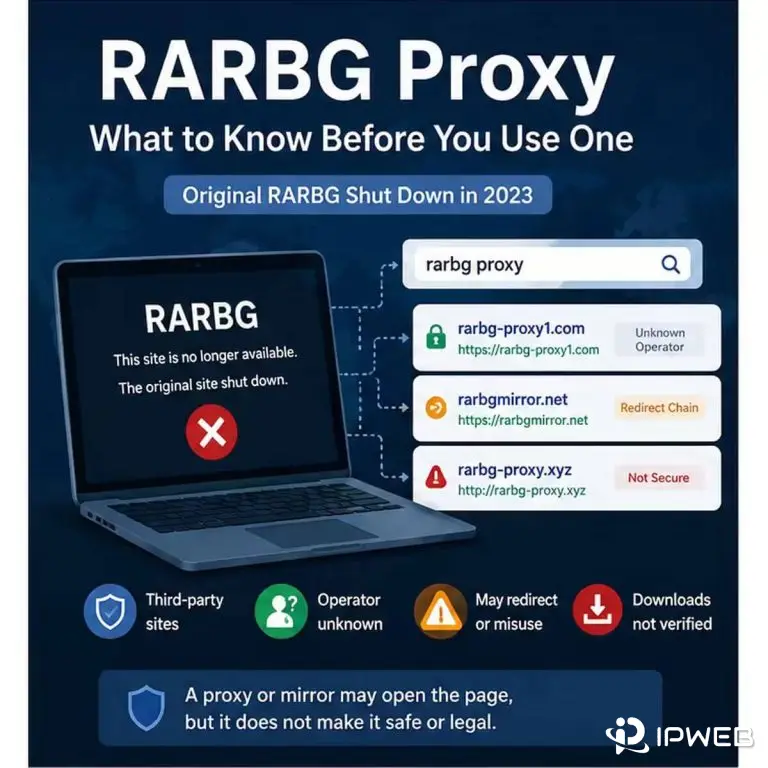
RARBG Proxy: What to Know Before You Use One
Search for a RARBG proxy today and you will find pages that look familiar but are not the original service. RARBG closed in May 2023, so current results are generally third-party mirrors, clone sites, web proxy pages, or link lists operated by unrelated parties. This guide does not publish a live RARBG proxy list. Instead, it explains what the term means, why these pages change so often, how a mirror differs from a proxy server, and which trust and network signals to check before relying on any result. Direct Answer A RARBG proxy is a broad label for a third-party...
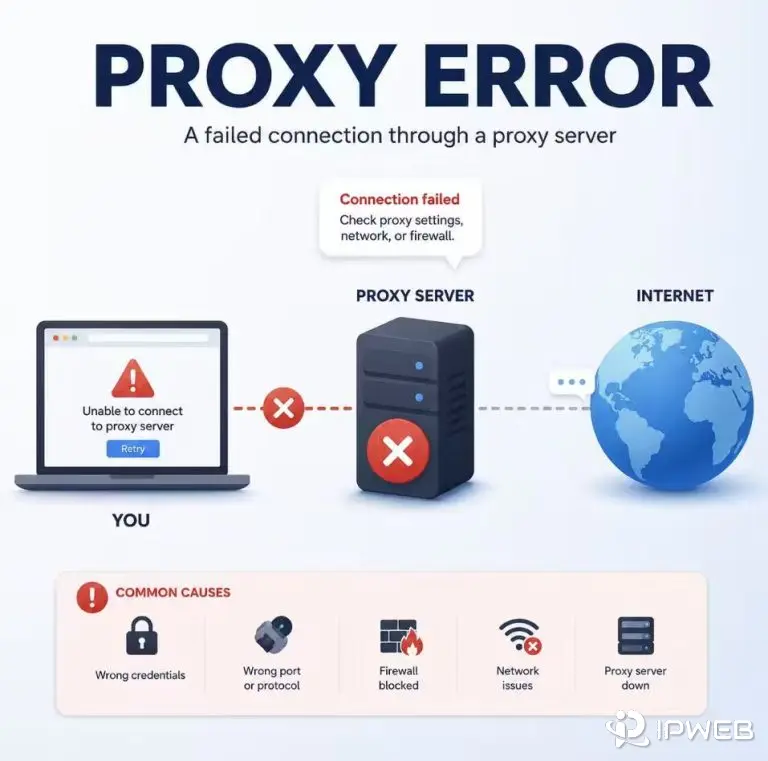
Proxy Error: What It Means and What to Check
A proxy error can stop a browser, API request, automation script, or desktop application from reaching its destination. The fastest way to diagnose it is to capture the exact error and identify whether the failure begins at the client, proxy endpoint, authentication layer, network path, or destination. Direct Answer A proxy error means a request failed somewhere along the path between the client, proxy server, and destination. Common causes include incorrect credentials, a closed port, protocol mismatch, blocked network traffic, local routing, DNS resolution outside the intended path, or a destination-side failure. Key Takeaways Read and record the exact error...
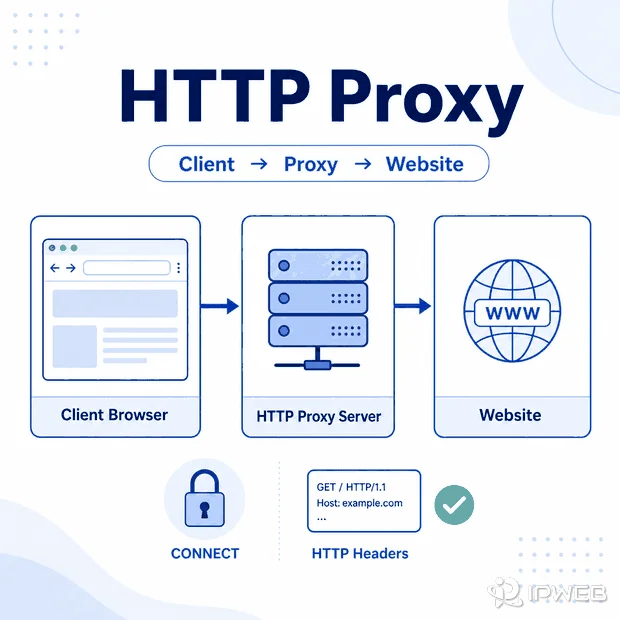
What Is an HTTP Proxy and How Does It Work?
An HTTP proxy sits between a client and a destination server. It receives web requests from the client, forwards them to the destination, and returns the response. The name can be confusing. An HTTP proxy is not limited to websites that use plain HTTP. It can also carry HTTPS traffic by using the CONNECT method to open a tunnel to the destination server. Direct Answer An HTTP proxy is a server that accepts HTTP-style proxy requests and forwards them through another network route. It can inspect unencrypted HTTP requests. For HTTPS destinations, it commonly creates a CONNECT tunnel that carries...
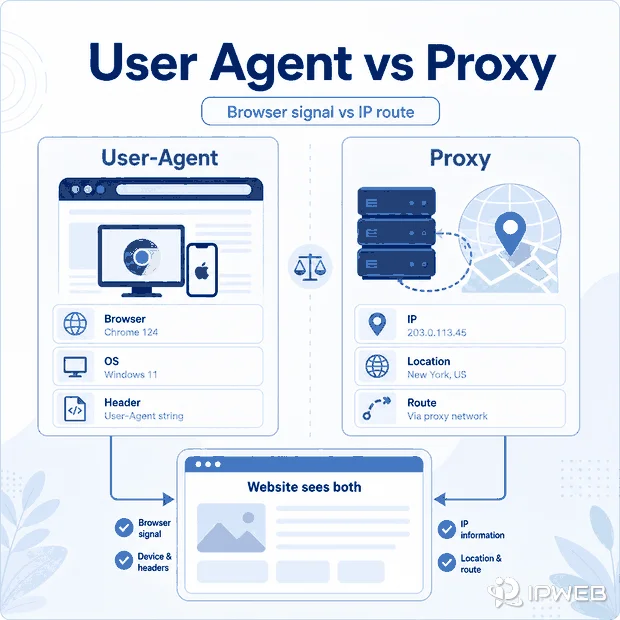
User Agent vs Proxy: What’s the Difference?
A user agent is the browser, application, or software client that sends a web request. A proxy is an intermediary that forwards that request through another network route. In simple terms, the user agent describes the client, while the proxy affects where the connection comes from. Understanding that difference matters when testing websites, configuring Playwright or Puppeteer, or troubleshooting a browser that still receives unexpected results after the proxy has changed. Direct Answer A user agent operates at the client and browser level. A proxy operates at the network level. Changing one does not recreate the other, so reliable testing...
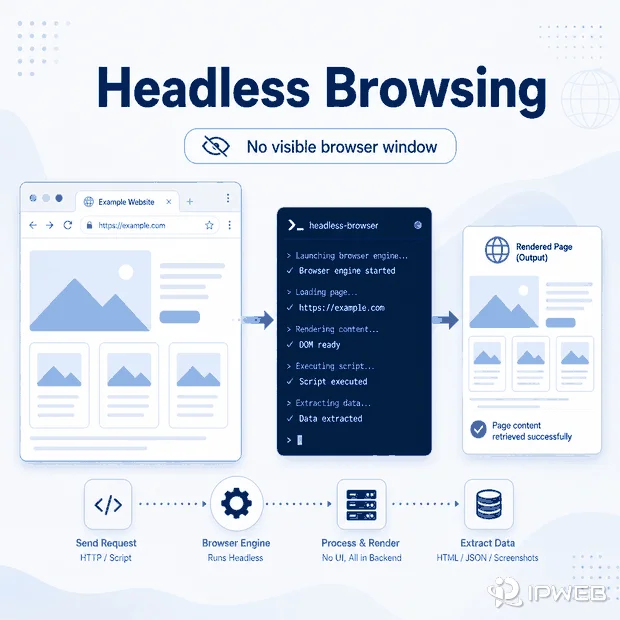
What Is Headless Browsing?
Headless browsing means running a real browser engine without opening a visible browser window. The browser can still load pages, execute JavaScript, store cookies, click elements, wait for network responses, and render the DOM. The difference is that the browser is controlled through code and runs in the background. For web scraping, testing, scheduled page checks, and browser automation, headless browsing is useful when a simple HTTP request cannot access the same page state that appears after browser rendering or interaction. It is not always the best choice. If the required data is already available in raw HTML or a...

Is Web Scraping Legal? Practical Checks for Teams
Web scraping can be legally acceptable in some situations and risky or prohibited in others. The answer depends on the source, the type of data, how access happens, the website’s terms, privacy rules, contract obligations, jurisdiction, and what the collected data will be used for. The safest way to assess a project is not to ask whether “web scraping” is legal in the abstract. A more useful question is whether a specific team can collect specific data from a specific source, for a specific purpose, using a specific access method. This article provides a practical risk-review framework for business and...
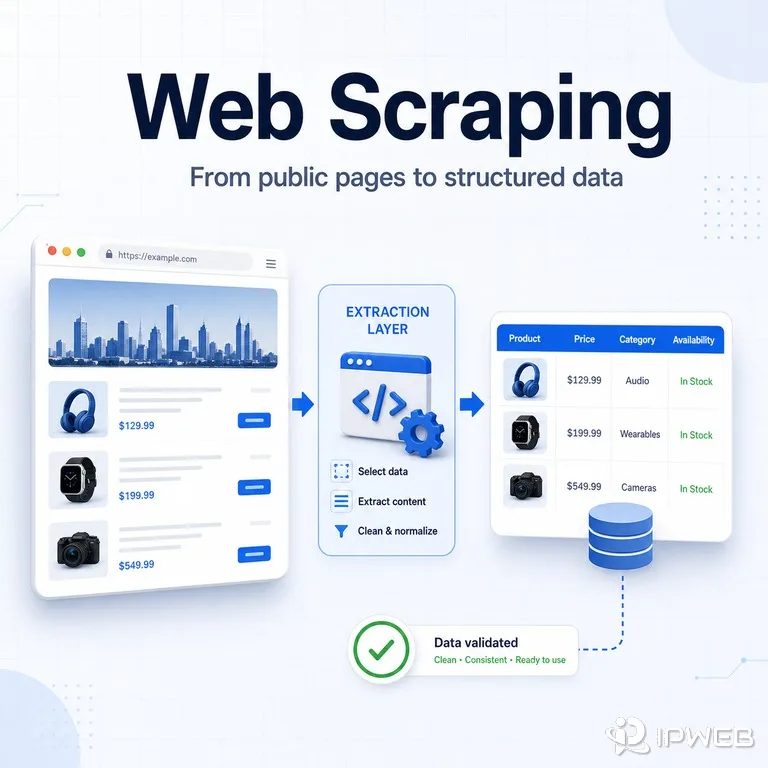
What Is Web Scraping?
A product page may show a title, price, rating, seller, and availability to a human reader. Web scraping turns those visible fields into structured records that software can compare, validate, search, and store. The output may be saved as CSV, JSON, a database table, or an internal dashboard. This makes it possible to analyze information across many public pages without manually copying every value. Real-world web scraping involves more than downloading HTML. A dependable workflow must identify the right fields, handle missing or JavaScript-rendered content, validate the extracted values, and respect the technical, privacy, and policy limits surrounding the source....
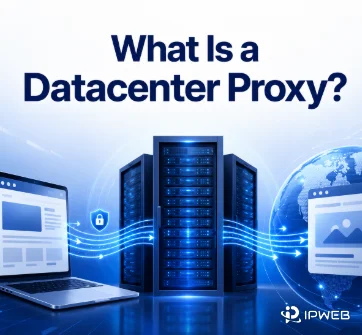
What Is a Datacenter Proxy?
A datacenter proxy routes your internet traffic through an IP address provided by a hosting company, cloud provider, or data center network. The destination website sees the proxy IP instead of your original public IP address. Datacenter proxies are widely used because they are fast, relatively affordable, and easy to scale. They work well for website testing, fixed-IP access, public web data tasks, API requests, and other workflows that do not require a consumer broadband connection. The main tradeoff is that websites and IP databases can often identify the IP as belonging to hosting or server infrastructure. That does not...
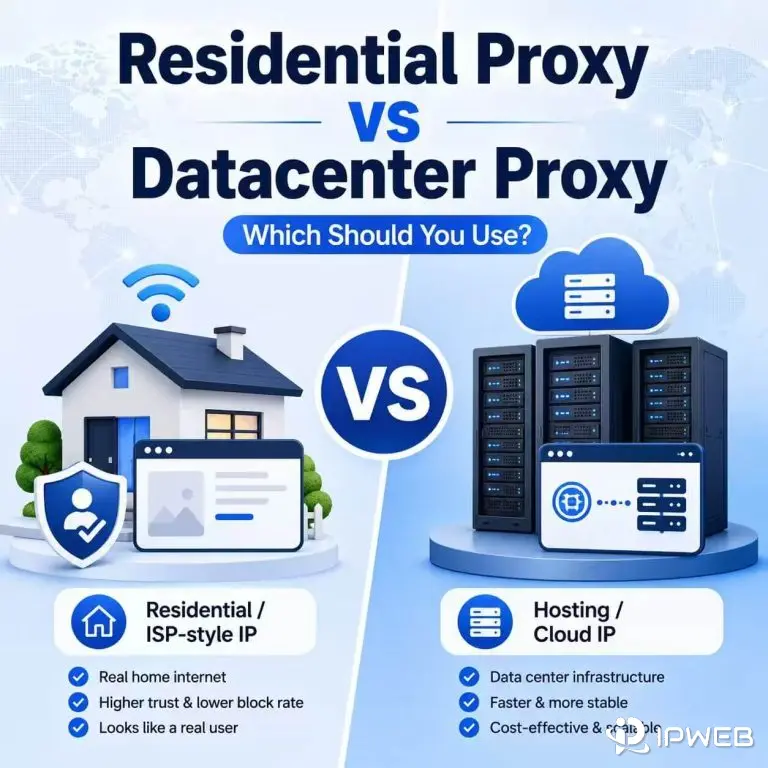
Residential Proxy vs Datacenter Proxy: Which Should You Use?
Residential proxies and datacenter proxies can both change the IP address a website sees. But they are not built for the same job. A residential proxy uses an IP address associated with a residential or ISP-style network. A datacenter proxy uses an IP address from hosting, cloud, or data center infrastructure. That difference affects speed, cost, reliability, IP classification, and where each proxy type makes sense. If you are checking localized pages, managing browser profiles, or working with account-based sessions, the network source may matter. If you are running backend tests, response checks, API routing, or internal QA tasks, paying...
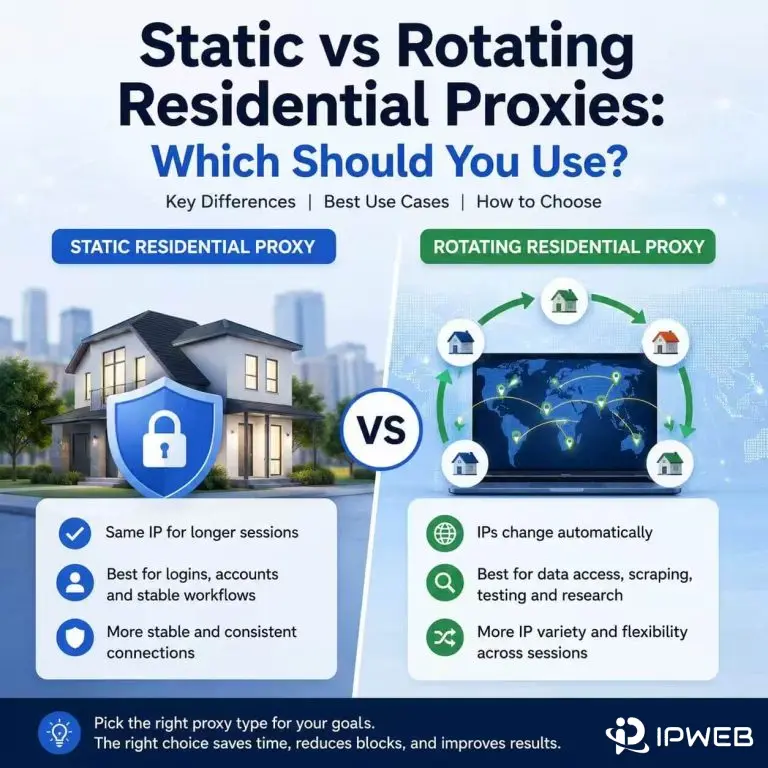
Static vs Rotating Residential Proxies: Which Should You Use?
Choosing a residential proxy is not just about picking a country, checking the price, or choosing the largest IP pool. The more practical question is this: should the IP stay the same, or should it change during the workflow? That decision matters more than many users expect. A dashboard login, seller account, social media profile, or long-running browser session usually works better with a stable IP. A regional search check, ad review, product availability check, or larger data access task may need many residential IPs across sessions instead of one fixed route. A static residential proxy keeps the same residential...
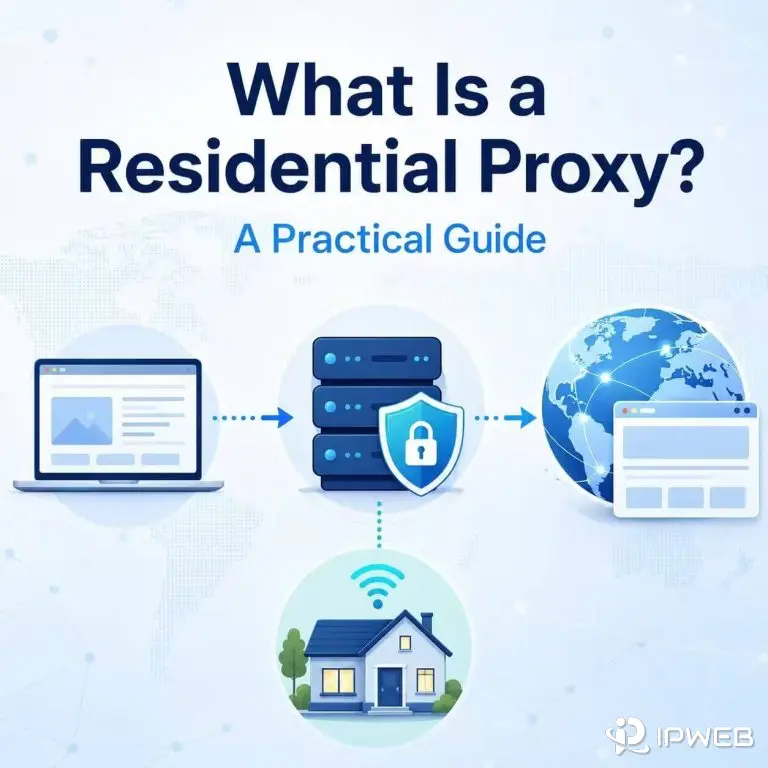
What Is a Residential Proxy? A Practical Guide
Not every proxy IP is treated the same way. One IP may come from a cloud hosting provider. Another may look like it belongs to a normal home internet connection. For websites, apps, risk systems, ad platforms, and regional content services, that difference can matter. A residential proxy is a proxy that routes traffic through an IP address associated with a residential internet connection. Instead of seeing your original public IP address or a typical data center IP, the destination website sees the residential proxy IP. This guide explains what a residential proxy is, how it works, what a residential...