
Comparison
Compare proxy providers, scraping tools and API services to choose the best solution.
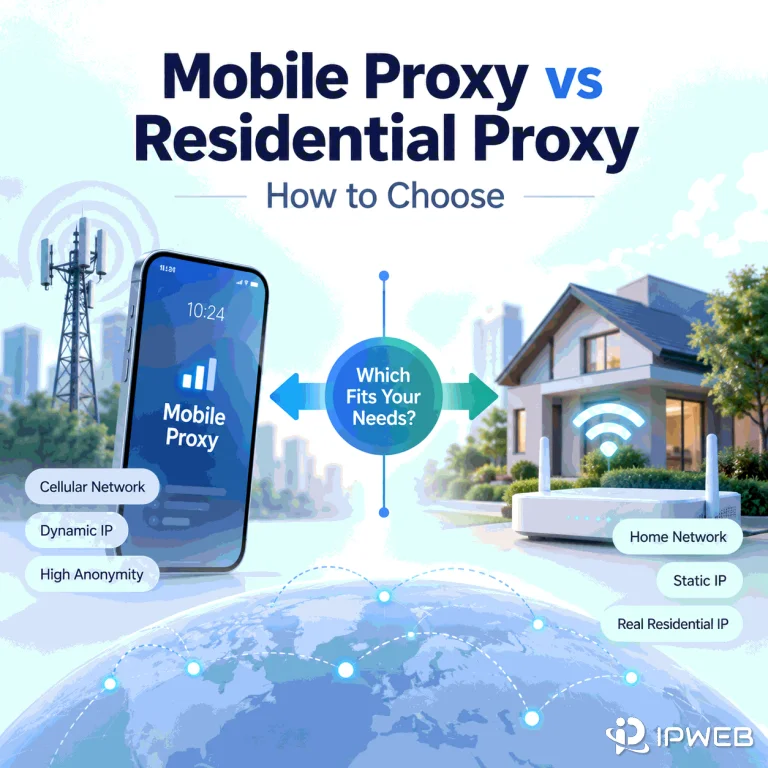
Mobile Proxy vs Residential Proxy: How to Choose
Choosing between a mobile proxy and a residential proxy starts with one question: what network identity does your workflow actually need to reproduce? Use a mobile route when the cellular carrier network itself matters. Start with residential when you need a consumer ISP path, broader residential geography, or repeatable web QA across residential locations. The important difference is not which proxy type sounds more “trusted.” Look at what the destination can observe instead: the ASN and organization behind the IP, how the public address is shared, how sessions change, and whether the location signal matches the test. Quick Answer Choose...
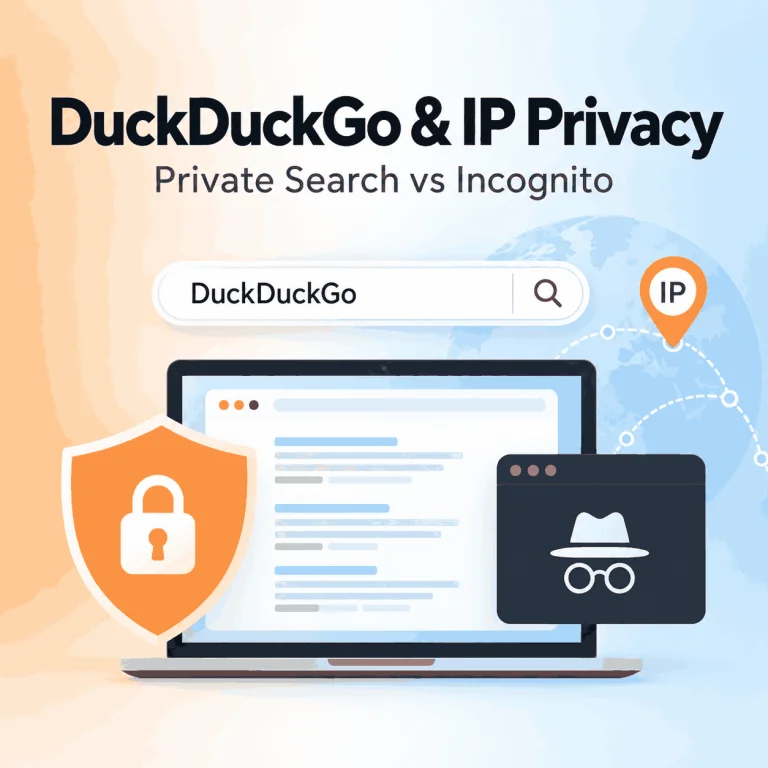
DuckDuckGo Private Search vs Incognito Mode: Does It Hide Your IP?
DuckDuckGo is widely associated with private search, so it is easy to assume that searching with DuckDuckGo also hides your IP address or works like browser incognito mode. Those are different privacy layers. DuckDuckGo says it does not save your IP address alongside your searches or build a personal search history from them. It also encrypts DuckDuckGo Search traffic with HTTPS. But using DuckDuckGo Search by itself does not replace the public IP address that other websites receive when you visit them. Quick Answer DuckDuckGo Search itself does not hide or replace your public IP. DuckDuckGo says it does not...
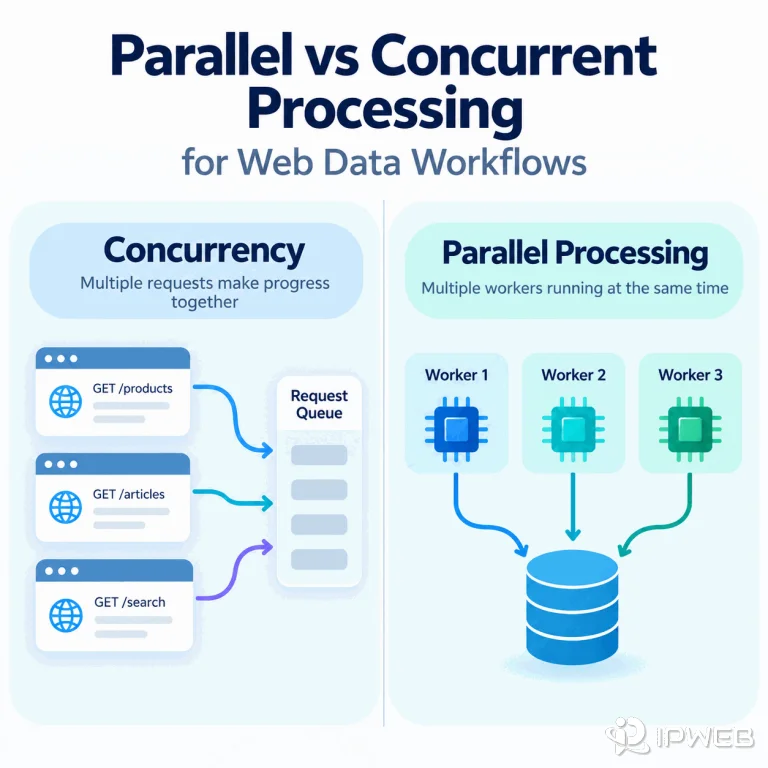
Parallel vs Concurrent Processing for Web Data Workflows
Web data workflows often slow down or fail because one stage spends time waiting while another becomes overloaded, retries too aggressively, or processes work faster than the next stage can accept it. For crawlers, APIs, browser rendering, parsing, and ETL-style data movement, the practical choice between concurrency and parallelism depends on whether the bottleneck is mostly network waiting, local compute, memory, or downstream capacity. Quick Answer Concurrent processing and parallel processing are related but not the same. Concurrency keeps multiple tasks in progress during the same period, which is useful when crawlers or APIs spend time waiting on network I/O....
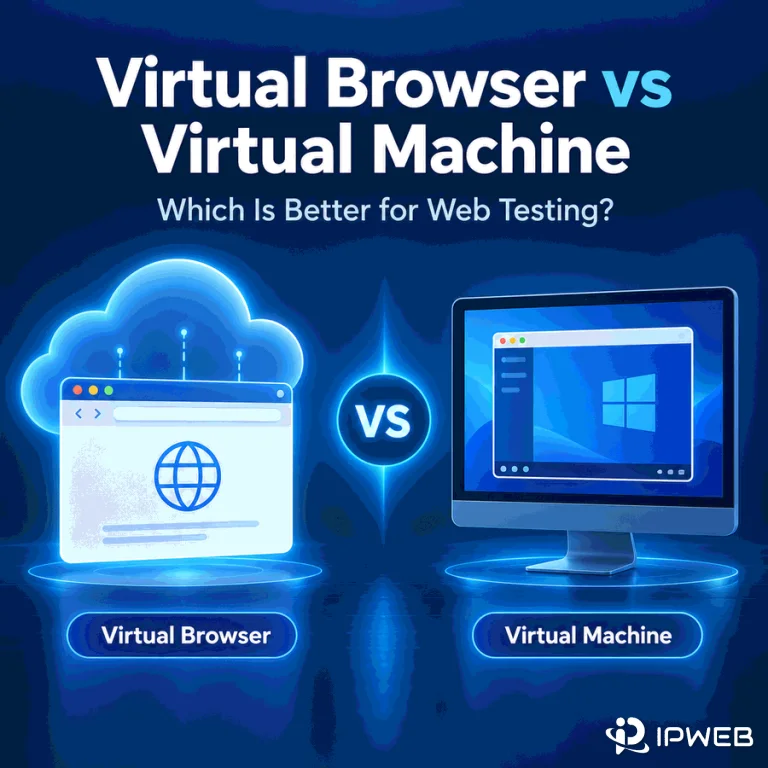
Virtual Browser vs Virtual Machine: Which Is Better for Web Testing?
A browser-specific bug can disappear when the browser version, operating system, or network path changes. That makes the test environment part of the evidence. A virtual browser can give you fast access to another browser or browser-and-OS combination, while a virtual machine gives you control over an entire guest operating system. The terms overlap, but they are not interchangeable. In web testing, virtual browser is best treated as an access model: you receive a browser session that runs in a provider-managed or isolated environment. The underlying session may run on a VM, container, real machine, or device depending on the...
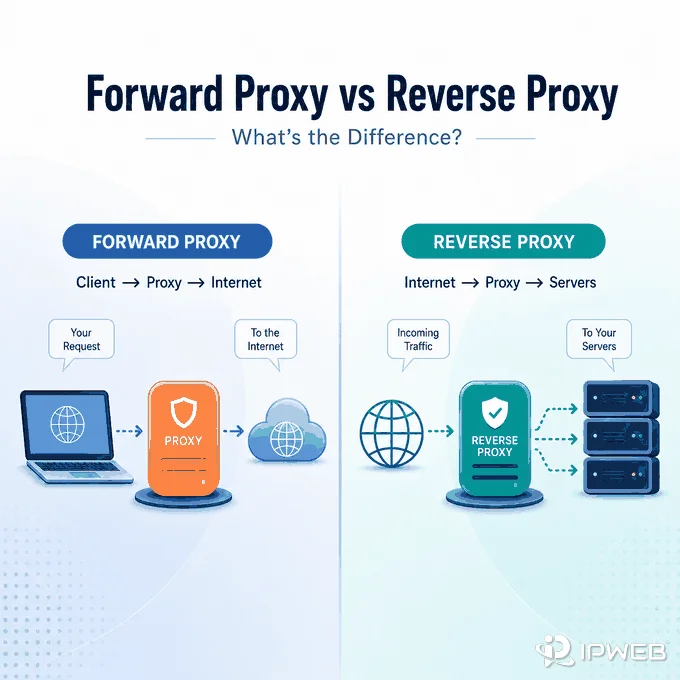
Forward Proxy vs Reverse Proxy: What’s the Difference?
A forward proxy and a reverse proxy are both intermediaries, but they stand on opposite sides of an application. A forward proxy represents clients making outbound requests. A reverse proxy represents servers receiving inbound requests. That difference determines who configures it, what it protects, and what problem it can solve. Quick Answer A forward proxy sits in front of a client, browser, application, or client network and sends outbound requests on that client’s behalf. A reverse proxy sits in front of one or more origin servers and receives inbound requests before passing them to the appropriate backend. A forward proxy...
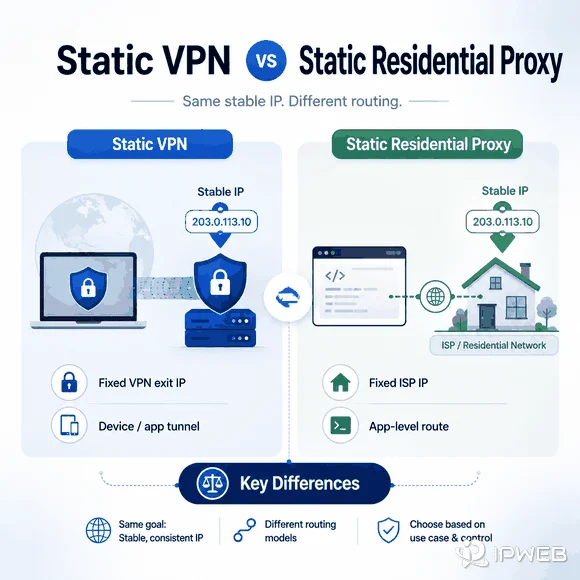
Static VPN vs Static Residential Proxy: Which Is Better?
Static VPNs and static residential proxies can both keep the same public exit IP, but they solve different routing problems. A static VPN keeps a VPN exit stable, while a static residential proxy keeps an application-level proxy route stable and uses an IP associated with an Internet Service Provider. The better fit depends on routing scope, network identity, and how the fixed IP will be used. The important questions are where the IP comes from, whether it is shared or dedicated, which applications use the route, and whether you need a device-level VPN tunnel or an application-level proxy connection. Quick...
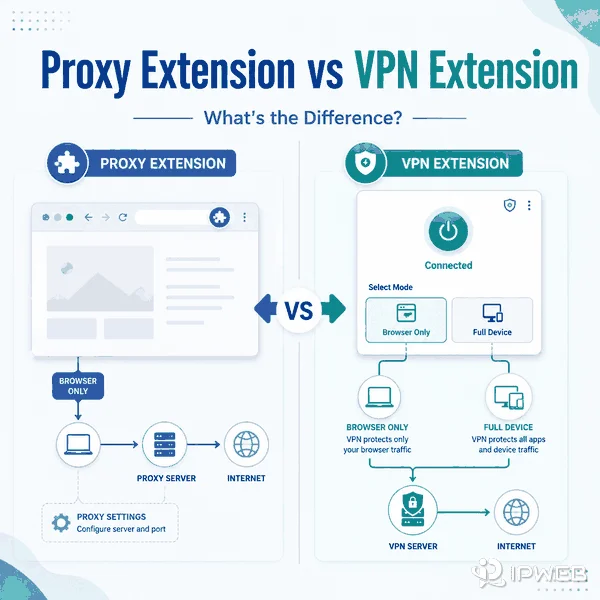
Proxy Extension vs VPN Extension: Are They the Same?
Browser stores use labels such as proxy extension, VPN extension, VPN proxy, and secure browser extension for tools that can look almost identical from the toolbar. The names are not enough to tell you how the traffic is actually routed. Two extensions with similar buttons may use completely different network architectures behind the browser. Quick Answer A proxy extension and a VPN extension are both browser extensions, but the labels do not guarantee different networking technology. A proxy extension explicitly routes browser requests through a proxy, while a product called a VPN extension may also be a browser proxy, a...
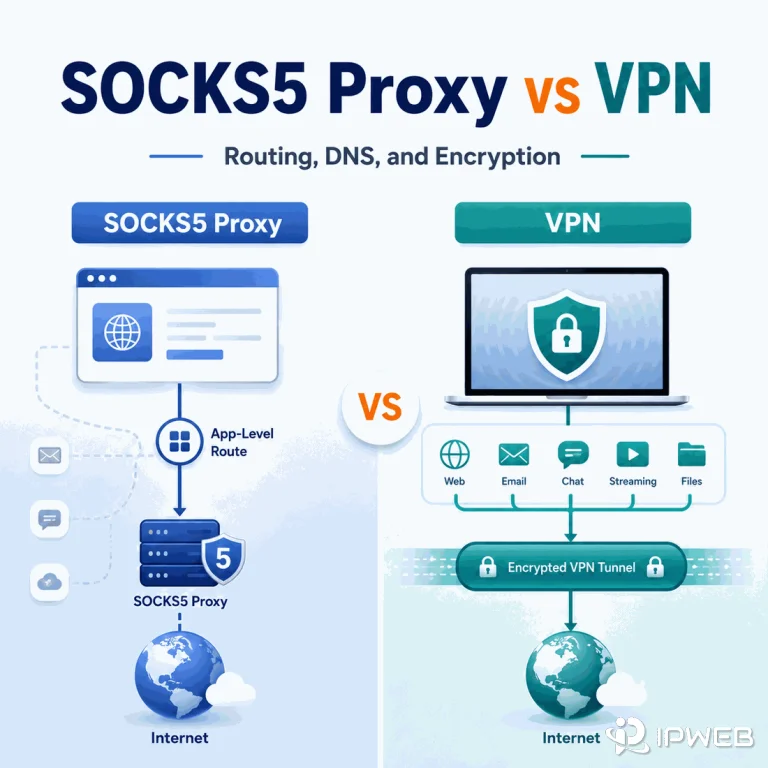
SOCKS5 Proxy vs VPN: What’s the Difference?
SOCKS5 proxies and VPNs can both change the network path between an application and the internet, but they solve different problems. The practical SOCKS5 proxy vs VPN difference is routing scope: SOCKS5 is usually configured for a specific browser, script, crawler, profile, or application, while a VPN normally creates an encrypted tunnel that can carry traffic for an entire device or a defined set of apps. Quick Answer A SOCKS5 proxy forwards traffic from a configured application through a SOCKS5 server. A VPN creates an encrypted tunnel between the device or VPN client and a VPN server, then routes traffic...
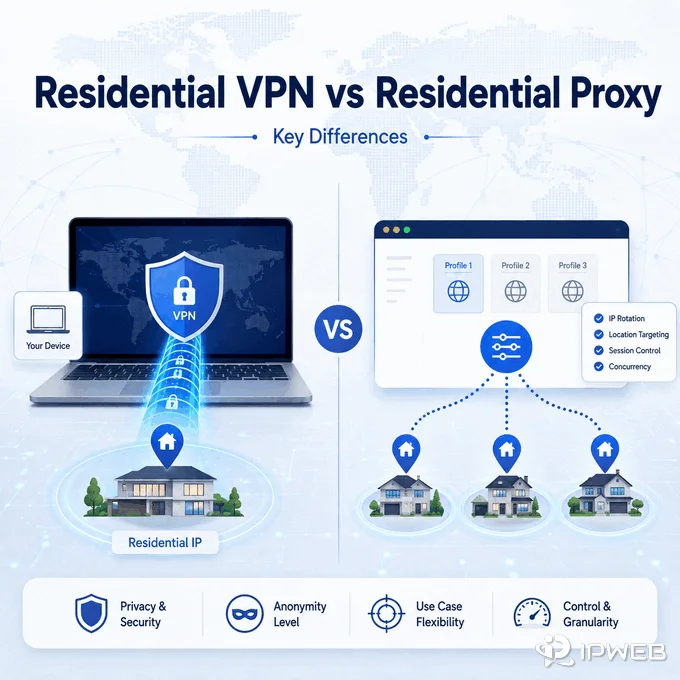
Should You Use a Residential VPN or Residential Proxy?
If you are comparing a residential VPN with a residential proxy, the confusing part is not the word "residential." Both can make traffic appear from a residential-looking IP address. The real difference is how traffic is routed, how much control you get per browser or application, and how easy the setup is to validate. Direct Answer A residential VPN routes device or app traffic through a VPN tunnel that may exit through a residential IP address. A residential proxy routes selected browser or application traffic through a proxy endpoint, which usually gives teams more control over sessions, locations, and per-task...
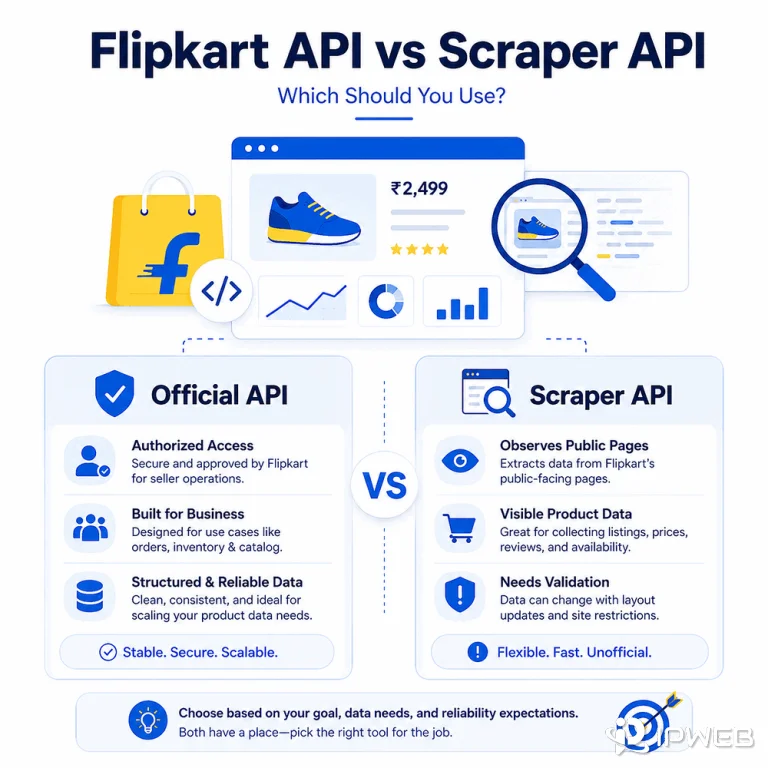
Flipkart API vs Scraper API: Which Should You Use?
Choosing a Flipkart data source depends on what you need to measure. Seller operations, catalog enrichment, price monitoring, availability checks, and competitive research do not all belong in the same API bucket. Direct Answer Use an official Flipkart API when you are an authorized seller or partner working with supported marketplace operations. A third-party data API or scraper API fits a different job. Use one only when the workflow is allowed, the source rules are respected, and the returned product, seller, price, availability, and timestamp fields can be validated. Key Takeaways The term “Flipkart API” can refer to official seller...
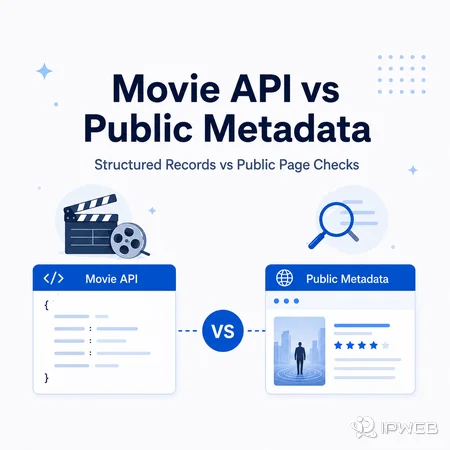
Movie API vs Public Movie Metadata: Which Should You Use?
A catalog team can have a clean movie record in an API and still see a different title, rating, artwork, or listing state on a public storefront. That is why movie API data and public movie metadata should not be treated as interchangeable sources. Use the API as the structured record. Use public-page checks when the page itself matters—for example, regional catalog QA, localized presentation, or confirming a recent listing change. Direct Answer Use a movie API when you need documented, structured fields for application integration or catalog enrichment. Use public movie metadata checks when you need to verify what...
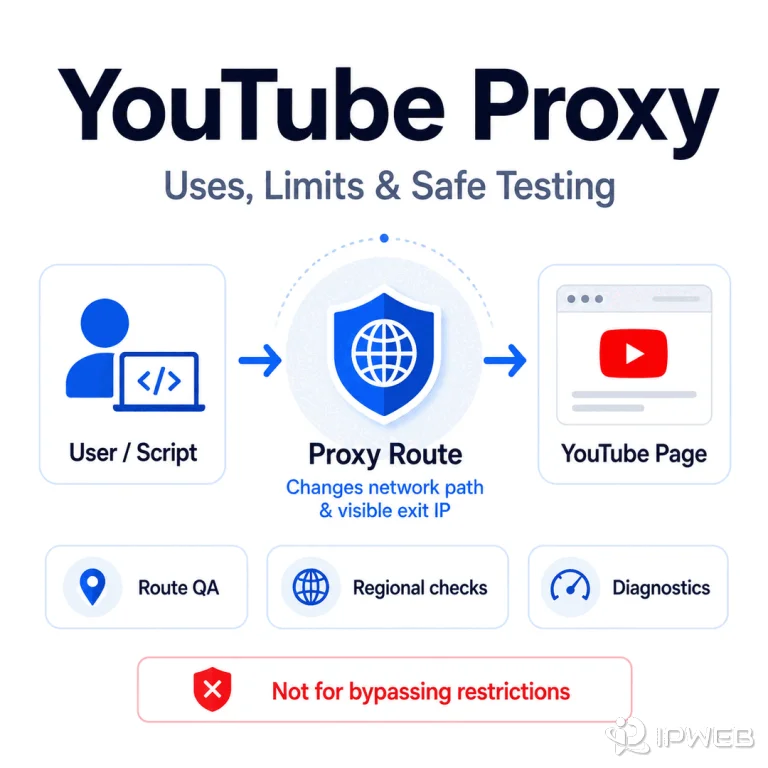
Do You Need a YouTube Proxy?
Search results for YouTube proxy terms are messy. Some pages promise access without limits, some list web proxy sites, and some treat "YouTube unblocked" as a generic entertainment query. For a business or data team, that is not a useful way to think about proxies. A safer YouTube proxy workflow starts with a narrower question: are you testing a network route, validating public page behavior, checking regional QA, or debugging a connection problem? A proxy can help with those network-layer tasks. It cannot make private content public, change account rules, remove API quotas, or override school, workplace, legal, or platform...