
Guides
Includes step-by-step tutorials and practical guides for proxies, scraping, APIs, and automation tools.
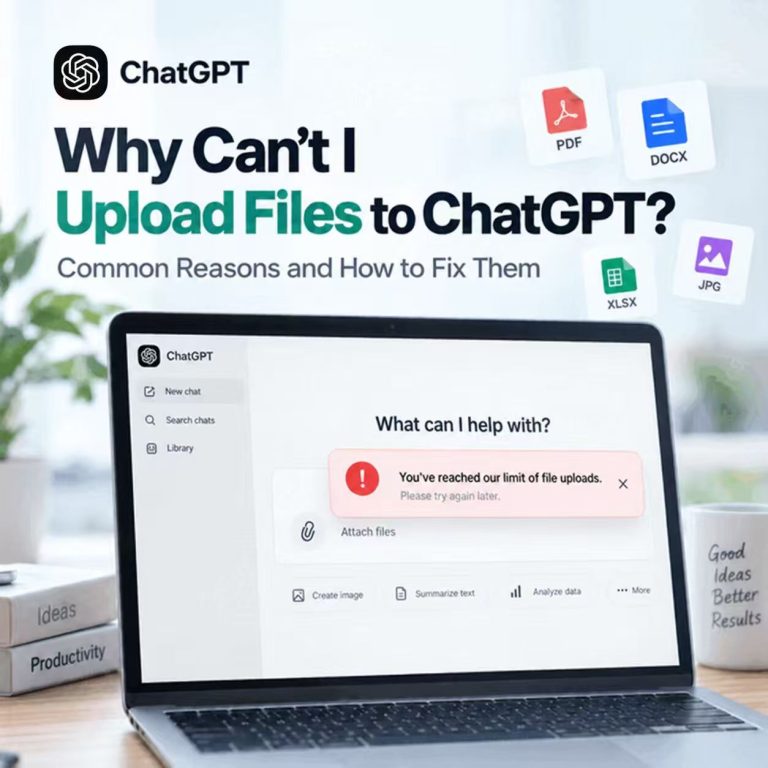
Why Can’t I Upload Files to ChatGPT?
If a ChatGPT file upload failed, the cause is not always the file size. A document can be under 512 MB and still exceed the text-token limit, a spreadsheet can hit a lower practical size cap, repeated failed attempts can contribute to an upload-rate limit, and a company network can block the host used to transfer files. The fastest diagnosis is to separate five layers: the file itself, per-file limits, rolling upload limits, storage or Project limits, and the upload network path. Start with a small known-good file, check the exact error message, confirm OpenAI service status, and only then...
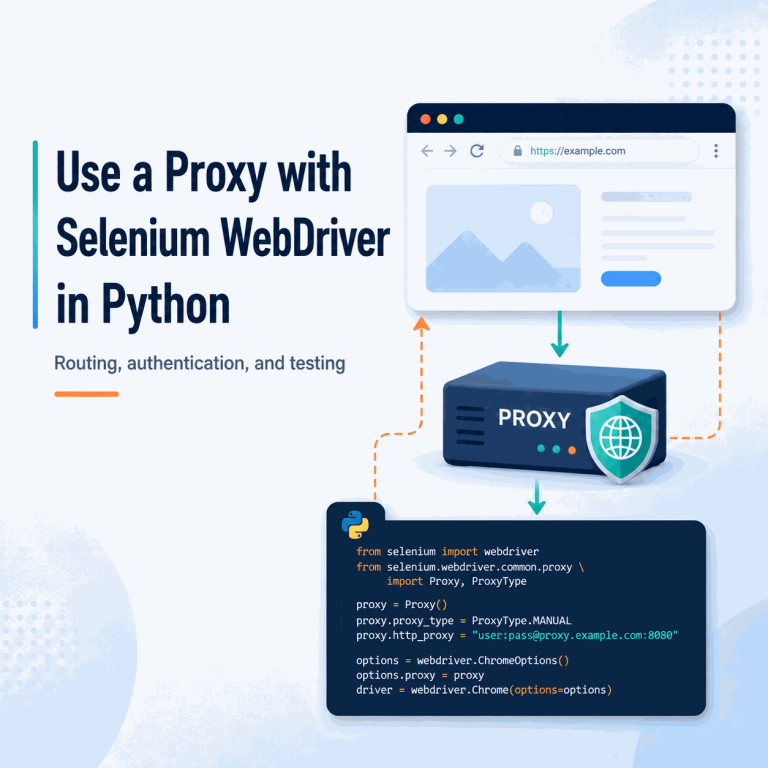
How to Use a Proxy with Selenium WebDriver in Python
A Selenium script can control Chrome correctly and still send every browser request through your normal internet connection. If the workflow needs a different network route for regional QA, public-web testing, or another authorized browser task, the proxy has to be attached to the WebDriver session itself and then verified inside that same browser. Quick Answer For a proxy that only needs a host and port, set Selenium's Proxy object on ChromeOptions before creating the driver. For a username/password proxy, current Selenium 4 can combine the proxy capability with a WebDriver BiDi authentication handler; Python's high-level BiDi network authentication API...
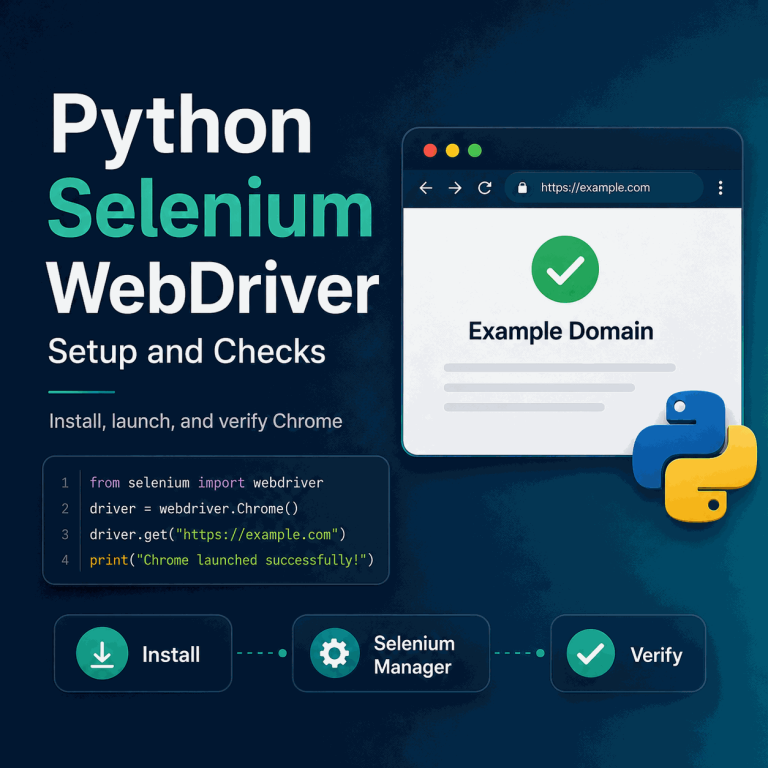
Python Selenium WebDriver: Setup and Checks
Setting up Selenium WebDriver with Python is simpler than many older tutorials suggest. Install the Selenium package, make sure a supported browser such as Chrome is available, then create a WebDriver session and verify that the browser can load and interact with a known page. Quick Answer Install Selenium with python -m pip install -U selenium, then start Chrome with webdriver.Chrome(). In modern Selenium, Selenium Manager usually handles driver discovery or download automatically when you do not provide a driver yourself. After the browser opens, confirm the URL, title, and a known element, then close the session with driver.quit(). Add...
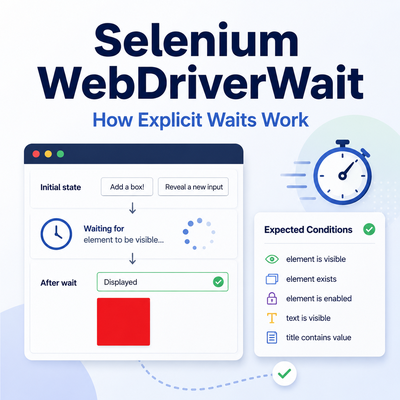
Selenium WebDriverWait: How Explicit Waits Work
Dynamic pages can change after the initial load. A Selenium command may therefore run before the element or browser state it needs is ready. WebDriverWait solves this by waiting for a specific condition instead of pausing for an arbitrary number of seconds. Quick Answer Selenium WebDriverWait is an explicit wait utility that repeatedly checks a browser condition until that condition becomes true or a timeout is reached. It is useful for JavaScript-rendered elements, delayed visibility, clickability, text changes, alerts, and other dynamic states. Unlike a fixed sleep, it can continue as soon as the required state is ready. Key Takeaways...
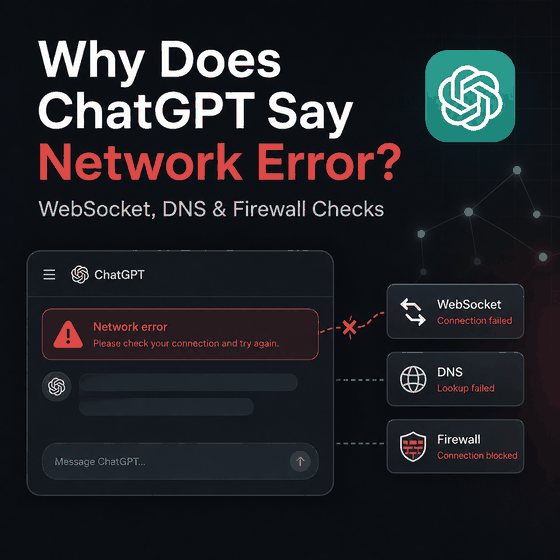
Why Does ChatGPT Say Network Error?
If ChatGPT says “A network error occurred” or reports an error while connecting to the WebSocket, the failure usually sits between the browser or app and ChatGPT’s servers. The cause can be a local Wi-Fi problem, VPN or proxy interference, secure DNS filtering, a corporate firewall, TLS inspection, a blocked WebSocket handshake, or a temporary OpenAI service issue. The fastest way to isolate the cause is to keep the account and device unchanged while changing one network variable at a time. Start with OpenAI Status, then compare Wi-Fi with mobile data or another network, disable VPN or proxy connections temporarily,...
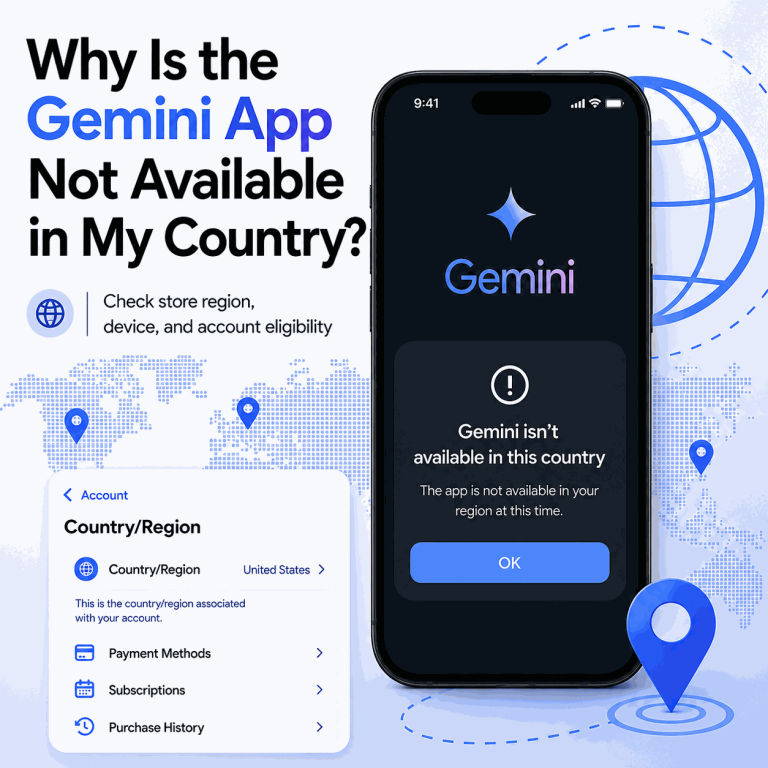
Why Is the Gemini App Not Available in My Country?
If Gemini works in a browser but the mobile app is missing, unavailable, or unsupported in your store, the problem is not automatically a network issue. Google treats Gemini web and mobile availability separately, and the app can also depend on store region, device requirements, account type, age, and rollout status. Quick Answer If the Gemini app is not available in your country, first check Google's current Gemini mobile app availability. Then verify your Google Play country or Apple Account country/region, device and OS compatibility, and Google account eligibility. A working Gemini web session is useful as a control test,...
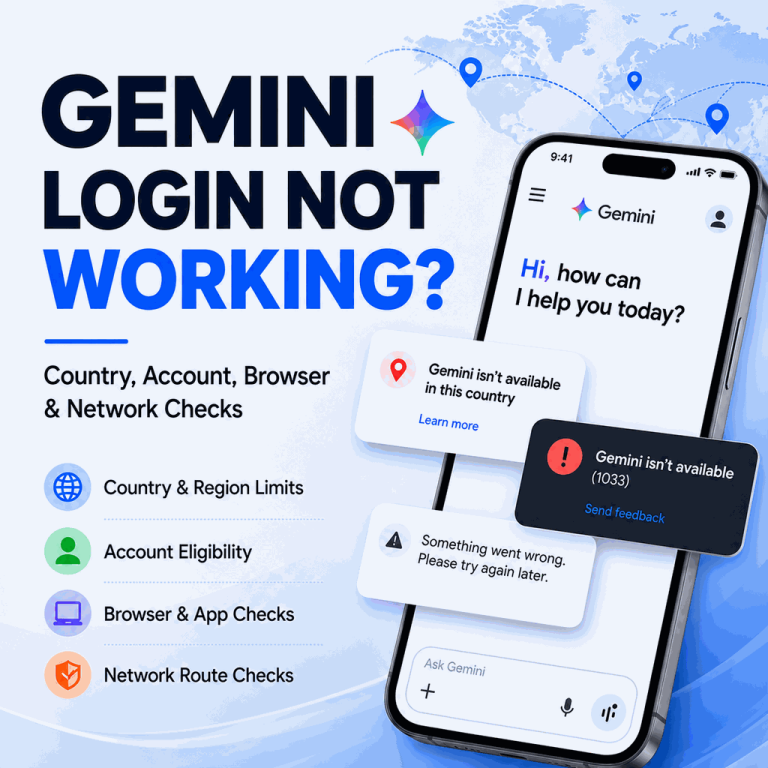
Why Is Gemini Login Not Working?
Gemini can fail before or after Google sign-in. You may get stuck in a login loop, see a country-unavailable message, or reach the app only to receive a generic error. Similar symptoms can come from very different causes. If Gemini login is not working, first determine whether the failure comes from Gemini availability, the Google account, the browser session, a temporary service issue, or the network route. Google states that the Gemini web app is available in more than 230 countries and territories and more than 70 languages, while the mobile app may have different availability. That difference matters when...
Why Does Search Console Show “Blocked Due to Access Forbidden (403)”
If Google Search Console reports “Blocked due to access forbidden (403)”, Google tried to fetch the URL but received an HTTP 403 response. For a public page that you want indexed, that means Google could not access the content and the page cannot be indexed until the access problem is fixed. The useful question is not simply “how do I remove a 403?” First decide whether the URL should be public at all. A 403 on an admin page, private dashboard, staging URL, or account-only resource may be correct. A 403 on a public article, product page, category page, or...
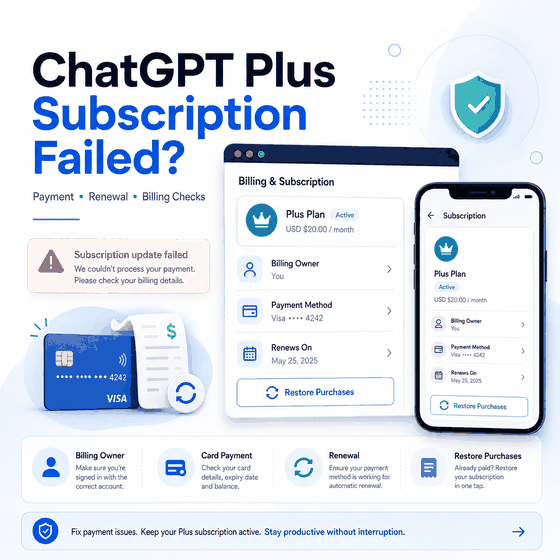
Why Did My ChatGPT Plus Subscription Fail?
A failed ChatGPT Plus subscription does not always mean the card itself is the problem. The first step is to identify where the subscription is managed: chatgpt.com, Apple App Store, or Google Play. Those purchase paths have different billing owners, account settings, and recovery steps. For web checkout, the failure may involve card details, billing address, bank restrictions, 3D Secure or Strong Customer Authentication, supported-country rules, browser state, or a renewal issue. For iOS and Android purchases, Apple or Google manages the subscription rather than ChatGPT web billing. Quick Answer If your ChatGPT Plus subscription fails, first confirm where you...
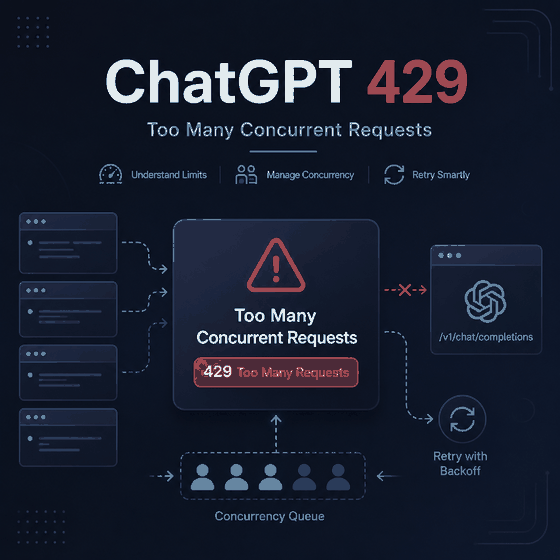
Why Does ChatGPT Say “Reached Concurrency Limit”?
You send one prompt and ChatGPT responds with “Reached concurrency limit.” Too many simultaneous requests are one possible cause, but that explanation becomes much weaker when you have only one active ChatGPT session and the error appears on your first request. The useful question is therefore not simply “How do I remove the concurrency limit?” First determine whether concurrent activity is actually present. A single controlled request can separate genuine overlap from a stuck session, a broader ChatGPT problem, or—if you are using the OpenAI API—a separate HTTP 429 condition. Quick Answer Reduce ChatGPT to one active session and send...
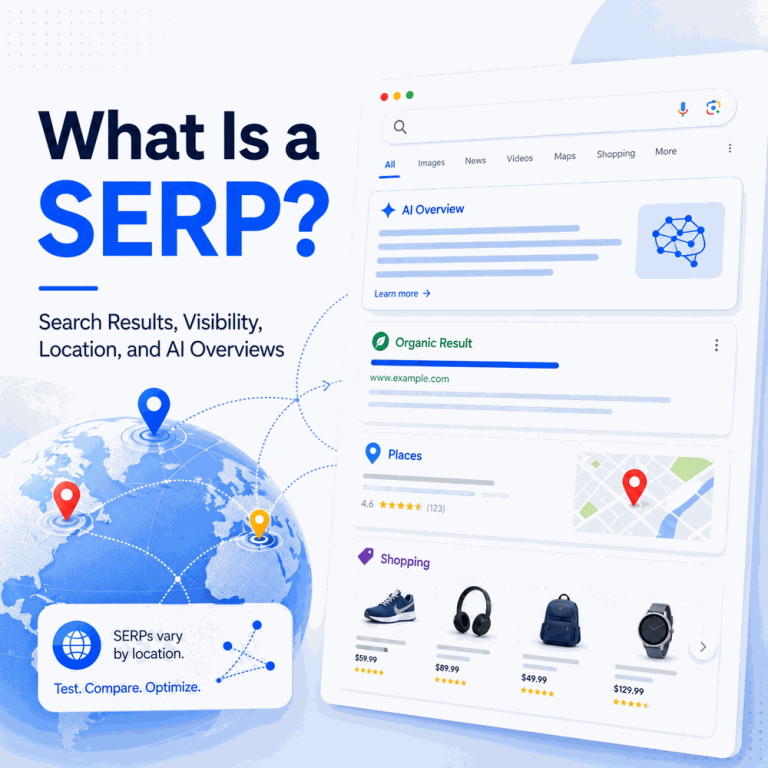
What Is a SERP?
A search engine results page can look different even when the query stays the same. Location, language, device type, time, and search context can change the results and the features shown around them. That makes SERPs important not only for SEO analysis, but also for regional search testing and repeatable visibility checks. Quick Answer A SERP, or search engine results page, is the page a search engine returns after a query. It can contain organic links, ads, local packs, featured snippets, videos, shopping results, People Also Ask boxes, knowledge panels, and AI-generated answers. Because search results can vary by location...
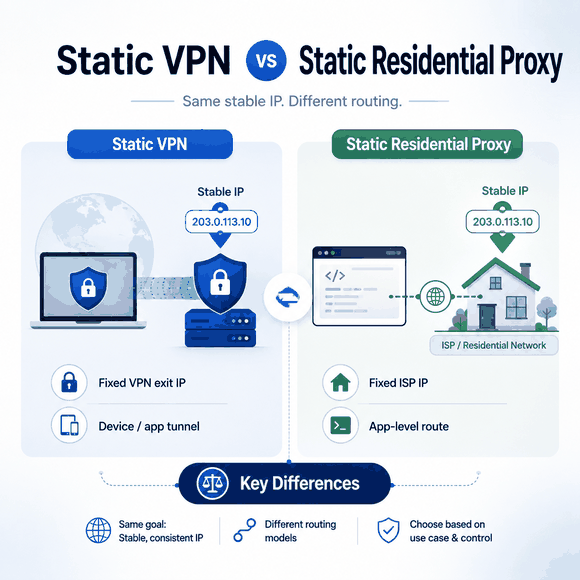
Static VPN vs Static Residential Proxy: Which Is Better?
Static VPNs and static residential proxies can both keep the same public exit IP, but they solve different routing problems. A static VPN keeps a VPN exit stable, while a static residential proxy keeps an application-level proxy route stable and uses an IP associated with an Internet Service Provider. The better fit depends on routing scope, network identity, and how the fixed IP will be used. The important questions are where the IP comes from, whether it is shared or dedicated, which applications use the route, and whether you need a device-level VPN tunnel or an application-level proxy connection. Quick...