
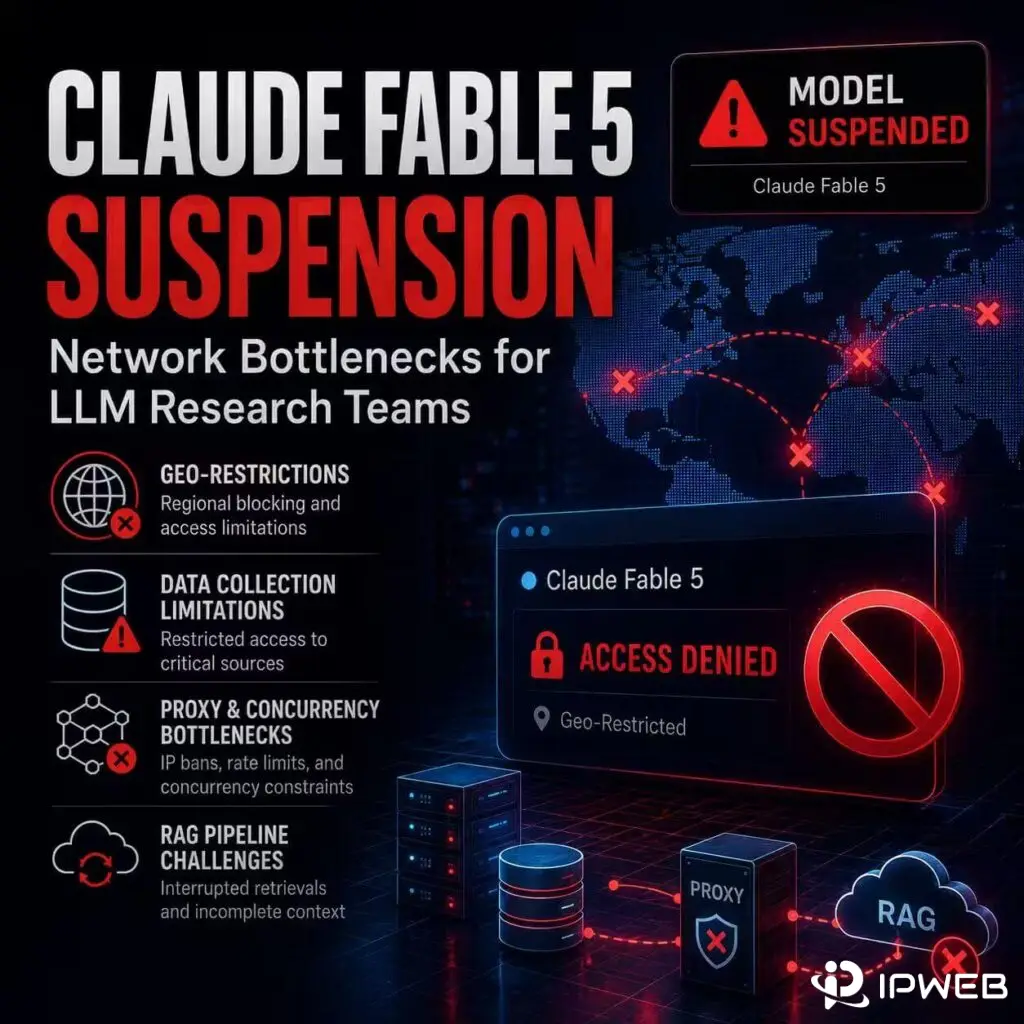
On June 9, 2026, Anthropic released its Mythos-class flagship model Claude Fable 5, targeting advanced code generation, cybersecurity analysis and long context reasoning workloads. Only four days later, Amazon flagged severe security flaws capable of generating malicious hacking content to U.S. regulators. The U.S. Commerce Department issued an EAR export control directive, forcing Anthropic to suspend Fable 5 and Mythos 5 globally within 90 minutes.
Unable to implement real-time nationality validation for billions of cross-border API requests, Anthropic fully blocked global access to both models indefinitely. Even U.S.-based overseas staff lost access, reflecting the rigidity of nationality-based regional locks. As mid-June 2026, no restoration timeline has been announced.
Within 24 hours of the shutdown, security researcher Pliny the Liberator published the complete 120,000-character Fable 5 system prompt file CLAUDE-FABLE-5.md on GitHub. Independent engineer Jamieson O'Reilly verified that injecting this prompt into standard Claude Opus 4.8 could replicate nearly all core logic, tone and tool calling rules of Fable 5 with minor code adjustments. Side-by-side webpage design benchmarks proved the replicated model matched the original Fable 5’s performance entirely.
# Warning: Dangerous operation, only for technical research verification
claude --dangerously-skip-permissions --system-prompt-file CLAUDE-FABLE-5.md
A mass of developers rushed to replicate Fable 5 capabilities via prompt injection, yet they quickly hit universal network infrastructure limits that plague all LLM teams. This incident is not merely a case of AI regulation and safety governance; it lays out four long-standing, under-discussed network bottlenecks for large-scale LLM development, validated by multiple 2026 industry red-teaming and data collection reports.
Critical Compliance Note: All network tools mentioned in this article are only for neutral technical verification of regional model behavior, and cannot be used to bypass official government export control and identity verification rules of AI vendors.
- 1. Geo-Restricted Model APIs Block Comprehensive Global Safety Auditing
- 2. Large-Scale Prompt & Training Corpus Collection Hits Hard Traffic and IP Quotas
- 3. Prompt Migration & Lightweight Model Replication Require Stable High-Concurrency Network Access
- 4. Production RAG Pipelines Demand Continuous Unblocked Residential IP Connectivity
- 5. Four Structural Flaws of Mainstream Proxy Ecosystems Restricting LLM Teams
- 6. Verified Real-World LLM Workflows Tied to Post-Fable 5 Industry Trends
- 7. Closing Analysis
- 8. FAQ Section
1. Geo-Restricted Model APIs Block Comprehensive Global Safety Auditing
The global ban of Fable 5 demonstrated a common pain point for AI security teams: top frontier LLMs enforce strict IP, jurisdiction and nationality access limits, while thorough safety red-teaming requires simulating organic user traffic across all target markets worldwide.
According to Cyber Security News coverage of Fable 5 jailbreak research, cross-border anti-jailbreak testing needs real consumer IP addresses from over 200 countries to discover region-specific prompt bypass vulnerabilities. Datacenter IPs carry identifiable ASN fingerprints, which WAF and model access filters flag as automated testing traffic, producing distorted and unreliable audit data, as detailed in the outlet’s May 2026 GenAI adversarial testing deep dive.
Small and mid-sized AI teams mostly rely on low-volume shared proxies to lift geo-blocks. Industry proxy benchmark data shows such services frequently suffer permanent IP bans, broken sticky sessions and limited city-level location targeting. Multi-day vulnerability audits get interrupted repeatedly, extending QA schedules by several business days.
2. Large-Scale Prompt & Training Corpus Collection Hits Hard Traffic and IP Quotas
The massive Fable 5 system prompt file illustrates a core industry reality: model behavior is largely determined by curated prompt libraries and geographically diverse training corpora. Building custom prompt banks, maintaining real-time RAG pipelines and fine-tuning open-source alternatives all rely on uninterrupted high-volume web crawling across thousands of domains.
Nearly all traditional proxy providers implement per-GB metered billing or rigid monthly request caps, which severely impede 24/7 batch data scraping for LLM development. When bandwidth quotas run out mid-corpus construction, incomplete datasets introduce regional and thematic bias into training loops, a risk documented in the March 2026 AI Data Infrastructure & Web Corpus Collection Guide from leaper.dev. Many AI startups face skyrocketing unexpected overage fees as dataset demands expand for prompt engineering and model replication tasks like the Fable 5 Opus 4.8 porting project.
3. Prompt Migration & Lightweight Model Replication Require Stable High-Concurrency Network Access
After Fable 5 was suspended, prompt porting to alternative base models became standard contingency work for teams dependent on Mythos-tier capabilities. This workflow — batch prompt injection testing, lightweight fine-tuning and public beta validation — needs hundreds of parallel concurrent connections without throttling or mass IP blacklisting.
Low-tier shared proxy infrastructure collapses under heavy parallel API calls and distributed crawling. Engineers have to split large jobs into fragmented batches and restart failed crawlers manually. Q2 2026 independent AI engineering surveys confirm this constant network troubleshooting wastes dozens of engineering hours every month that could be spent on prompt iteration and model optimization. The concurrency load test report from Jevvel Labs measured that shared low-cost proxy pools cut parallel prompt validation throughput by 72% under batch injection workloads identical to post-Fable 5 model porting pipelines.
4. Production RAG Pipelines Demand Continuous Unblocked Residential IP Connectivity
Retrieval-Augmented Generation (RAG) is a standard solution to reduce factual hallucinations for production LLMs, requiring perpetual live web data requests to refresh reference materials. Unlike one-off research scraping jobs, production RAG pipelines run 24/7, making stable low-block residential IP connectivity an indispensable infrastructure requirement.
Frequent IP rotation failures or undersized proxy pools create gaps in real-time data feeds, resulting in outdated, inaccurate outputs for customer-facing AI chatbots, enterprise research tools and internal analytical assistants. This operational failure mode has been recorded in hundreds of production LLM deployment reports published between 2025 and 2026.
5. Four Structural Flaws of Mainstream Proxy Ecosystems Restricting LLM Teams
The disruption caused by Fable 5’s sudden shutdown exposed shared infrastructure flaws affecting nearly every team conducting LLM research, security testing and dataset building. These are universal structural defects within today’s mainstream cross-border access and proxy ecosystem, not isolated issues for individual developers:
-
Metered bandwidth creates unpredictable cost barriers
Conventional proxy services charge traffic by gigabyte or cap monthly request volumes. Long-running corpus crawling, round-the-clock RAG sync and batch prompt testing exhaust allocated quotas quickly, forcing teams to pause development or bear unplanned surcharges.
-
Small centralized IP pools cannot simulate global user scenarios
Datacenter IPs and limited shared proxy pools carry obvious automated access markers. They fail to mimic real consumer IPs from hundreds of regions, leading to incomplete cross-region safety audits and biased multilingual training datasets.
-
Poor compatibility with mainstream LLM automation frameworks
Most low-tier proxy products lack standardized open APIs. Engineers must rewrite scraping, prompt injection and batch test scripts to adapt to incompatible network services, wasting core development resources.
-
Unstable connections break long-cycle vulnerability audits
Uncontrolled IP rotation, frequent disconnections and low uptime interrupt multi-day continuous red-teaming and cross-model comparison experiments. Interrupted testing needs repeated restarts, drastically extending overall research timelines.
All four flaws simultaneously hampered teams attempting to replicate Fable 5 after its suspension, and they remain hidden long-term cost burdens for AI research teams of all sizes.
6. Verified Real-World LLM Workflows Tied to Post-Fable 5 Industry Trends
The four core use cases below reflect observable developer behavior in the weeks following Fable 5’s suspension, cross-verified with AI engineering forum discussions and independent proxy industry case studies:
-
Custom proprietary prompt dataset construction
Teams building internal prompt libraries to replace restricted closed frontier models rely on unlimited residential proxy networks to crawl multi-domain conversational, technical and safety content without traffic overage interruptions.
-
Distributed cross-border LLM security red-teaming
Globally distributed residential IP pools support coordinated anti-jailbreak testing across all target geographic markets, revealing jurisdiction-specific safety loopholes undetectable with narrow datacenter IP testing pools.
-
Lightweight open-source model prompt porting
Developers migrating prompt logic from locked models such as Fable 5 to open alternatives run high-concurrency batch validation jobs, which demand unlimited bandwidth and stable parallel proxy connections.
-
Permanent real-time RAG data refresh for production AI applications
Flat-rate unlimited residential proxy access eliminates recurring bandwidth billing overhead for continuous web crawling pipelines powering commercial customer-facing LLM chat tools and internal enterprise AI assistants.
7. Closing Analysis
The abrupt suspension of Claude Fable 5 serves as a high-impact case study of systemic AI infrastructure risks, with implications far beyond regulatory compliance and model safety. This event reveals an overlooked structural constraint shared by independent AI labs, startup engineering teams and enterprise AI departments: advanced prompt engineering, full-scope model auditing and unbiased dataset development cannot move forward without flexible, scalable global network infrastructure.
Geo-access locks, automated IP blocking and metered traffic limits are not minor technical nuisances. They directly slow prompt optimization cycles, delay end-to-end safety validation and introduce bias into training corpora. For teams aiming to eliminate recurring network obstacles during cross-border testing and large-scale data collection, specialized unlimited residential proxy infrastructure built exclusively for AI workloads can resolve these persistent pain points.
Looking ahead to 2026–2027 industry trends, cross-border network capability will no longer be a secondary auxiliary tool for LLM teams. As global AI regulation tightens and distributed model development becomes mainstream, scalable residential proxy infrastructure will evolve into core foundational infrastructure for AI research and production.
8. FAQ Section
All answers reference standard proxy & LLM industry documentation, with neutral, non-promotional wording