

Ryan
IP Proxy Research Team
Ryan is a web data and proxy infrastructure specialist focused on IP networks, scraping systems, SERP APIs, and global data access solutions. He shares practical insights on proxy usage, data collection architecture, and scalable web intelligence systems.
Ryan's Articles
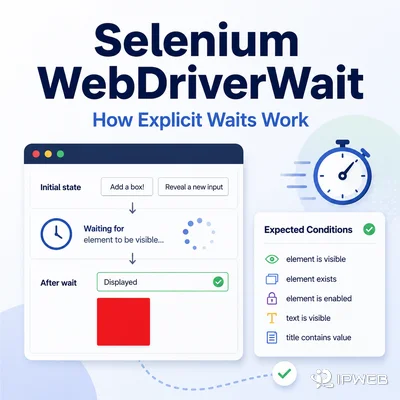
Selenium WebDriverWait: How Explicit Waits Work
Dynamic pages can change after the initial load. A Selenium command may therefore run before the element or browser state it needs is ready. WebDriverWait solves this by waiting for a specific condition instead of pausing for an arbitrary number of seconds. Quick Answer Selenium WebDriverWait is an explicit wait utility that repeatedly checks a browser condition until that condition becomes true or a timeout is reached. It is useful for JavaScript-rendered elements, delayed visibility, clickability, text changes, alerts, and other dynamic states. Unlike a fixed sleep, it can continue as soon as the required state is ready. Key Takeaways...

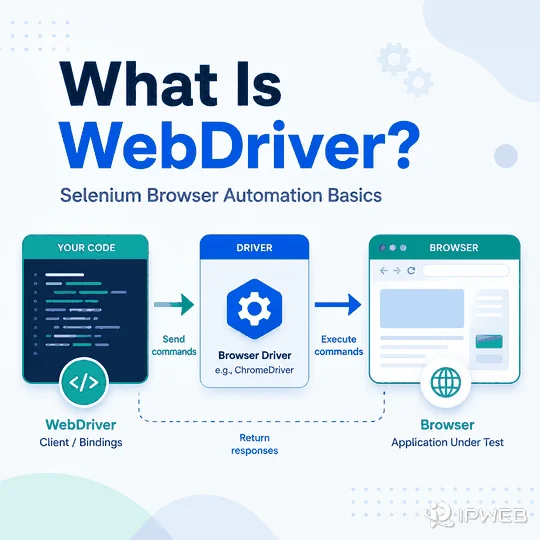
What Is WebDriver? Selenium Browser Basics
Web pages that depend on JavaScript, clicks, form input, or browser state often need more than a plain HTTP request. WebDriver gives test and automation code a standardized way to open a browser, interact with page elements, and inspect the result. Quick Answer WebDriver is a standardized way for software to control a web browser through commands such as opening a page, finding an element, clicking, typing, reading text, and closing the session. Selenium WebDriver is the best-known implementation used for browser testing and automation. WebDriver is useful when a workflow depends on real browser behavior, including JavaScript rendering and...
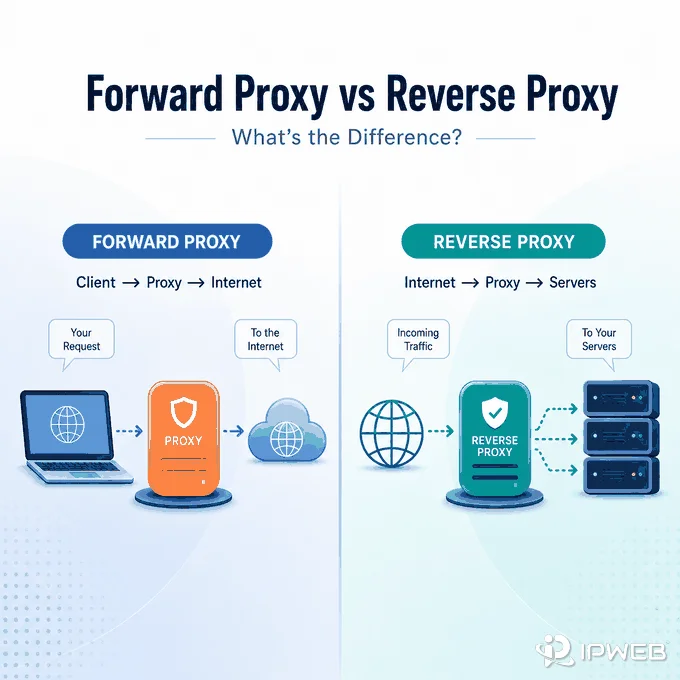
Forward Proxy vs Reverse Proxy: What’s the Difference?
A forward proxy and a reverse proxy are both intermediaries, but they stand on opposite sides of an application. A forward proxy represents clients making outbound requests. A reverse proxy represents servers receiving inbound requests. That difference determines who configures it, what it protects, and what problem it can solve. Quick Answer A forward proxy sits in front of a client, browser, application, or client network and sends outbound requests on that client’s behalf. A reverse proxy sits in front of one or more origin servers and receives inbound requests before passing them to the appropriate backend. A forward proxy...
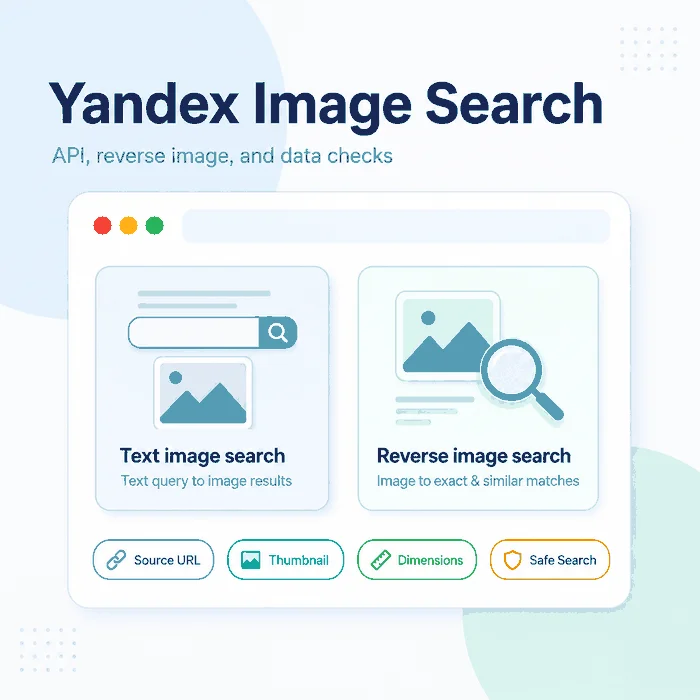
How Does Yandex Image Search Work? API & Reverse Search
Yandex image search is useful when a team needs to inspect public image results, compare visual search output across regions, or validate where an image appears on the open web. The difficult part is not entering a query into Yandex Images. It is choosing the right source, identifying which fields are reliable, and keeping the result set consistent enough for comparison. Reliable Yandex image data starts with a clear distinction between text image search and reverse image search. From there, the workflow depends on whether the task needs browser-based review, an official API, a structured SERP API, or a limited...
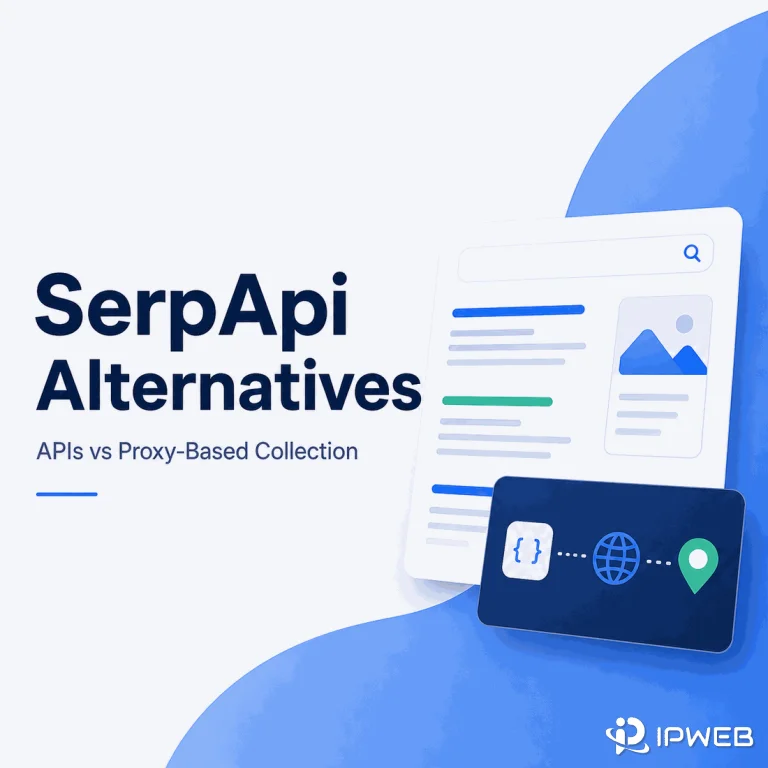
SerpApi Alternatives: SERP APIs vs Proxy-Based Collection
SerpApi is one of several ways to obtain search-results data, but choosing an alternative is not only about comparing API prices. The more important decision is whether you want a managed SERP API that returns structured data, or a self-managed collection workflow where your team controls the browser or request layer, regional network route, parsing, storage, and validation. Quick Answer Choose a managed SERP API such as Serper, DataForSEO, or Bright Data when you need ready-to-use structured search data with less infrastructure work. Consider a proxy-based collection architecture when you need direct control over the browser or HTTP client, regional...

How to Use a SERP Checker for Accurate Local Results
A SERP checker is most useful when it helps you reproduce and explain a search result under known conditions. For local SEO, market QA, and regional search analysis, the important question is not only what the checker returned, but whether the location, language, device, time, and network route used for the check were actually consistent. Quick Answer A SERP checker captures search results for a keyword under a defined search context. For reliable local checks, record the search engine, country or city, language, device, timestamp, and visible SERP features. If a regional proxy is part of the workflow, verify the...
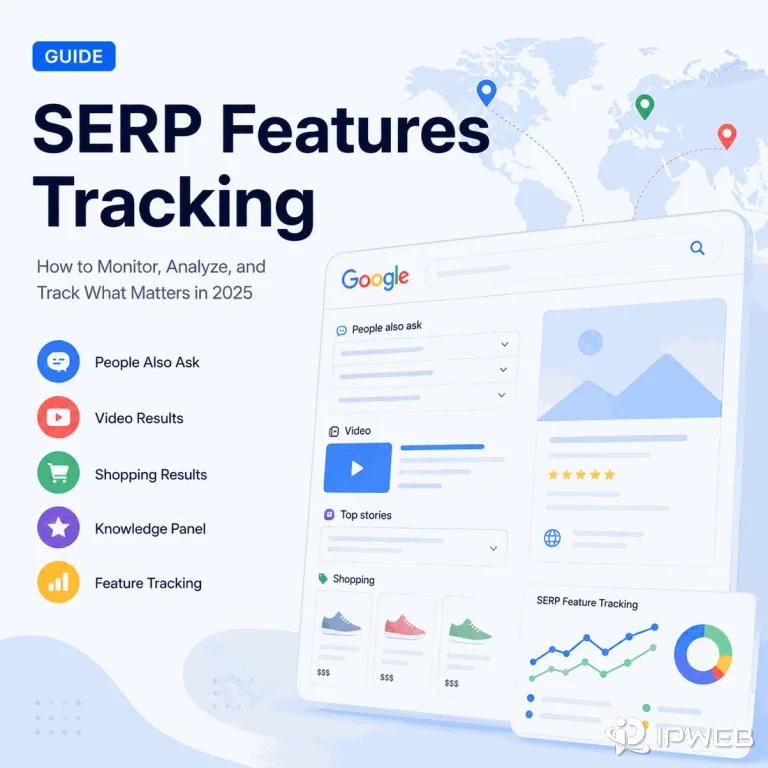
What Are SERP Features? Types, SEO Impact, and Regional Checks
SERP features can change what users see before they ever reach a traditional organic listing. For teams comparing search visibility across countries or cities, the important question is not only which features appear, but whether those observations were collected under consistent location, language, device, and timing conditions. Quick Answer SERP features are search-result elements beyond a standard organic listing, such as featured snippets, People Also Ask, local packs, shopping results, videos, knowledge panels, Top Stories, and AI Overviews. For regional SEO checks, track both feature presence and feature ownership while keeping the search environment consistent. A region-targeted proxy can help...
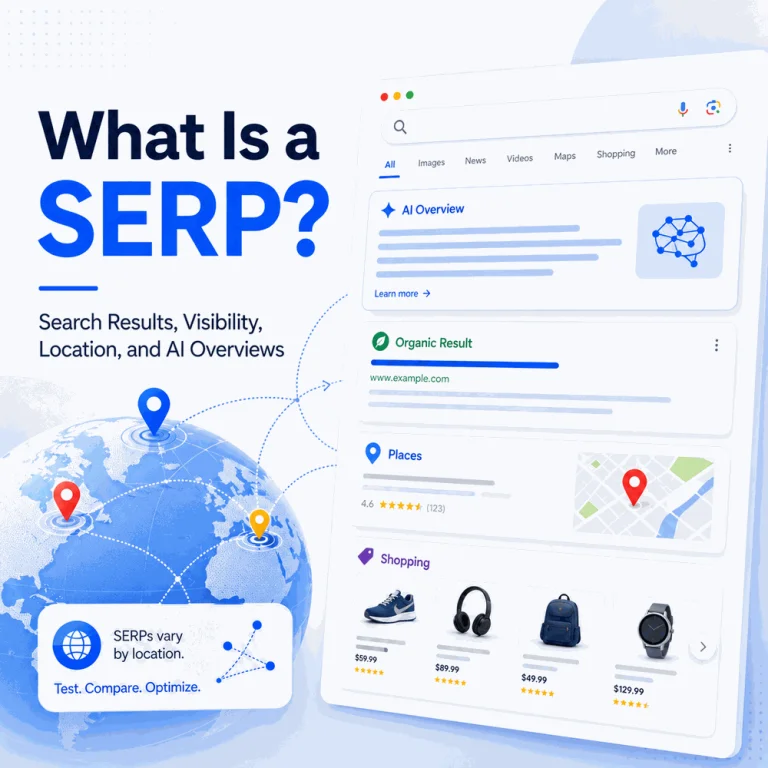
What Is a SERP?
A search engine results page can look different even when the query stays the same. Location, language, device type, time, and search context can change the results and the features shown around them. That makes SERPs important not only for SEO analysis, but also for regional search testing and repeatable visibility checks. Quick Answer A SERP, or search engine results page, is the page a search engine returns after a query. It can contain organic links, ads, local packs, featured snippets, videos, shopping results, People Also Ask boxes, knowledge panels, and AI-generated answers. Because search results can vary by location...
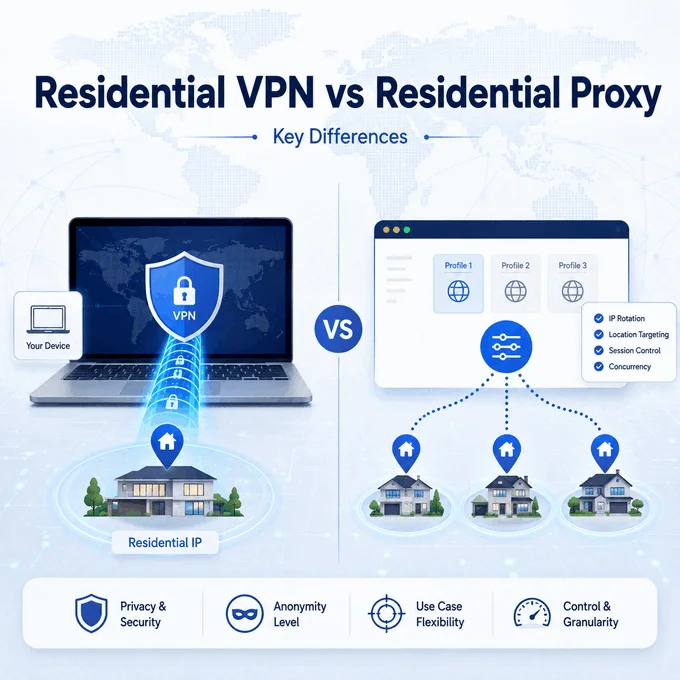
Should You Use a Residential VPN or Residential Proxy?
If you are comparing a residential VPN with a residential proxy, the confusing part is not the word "residential." Both can make traffic appear from a residential-looking IP address. The real difference is how traffic is routed, how much control you get per browser or application, and how easy the setup is to validate. Direct Answer A residential VPN routes device or app traffic through a VPN tunnel that may exit through a residential IP address. A residential proxy routes selected browser or application traffic through a proxy endpoint, which usually gives teams more control over sessions, locations, and per-task...
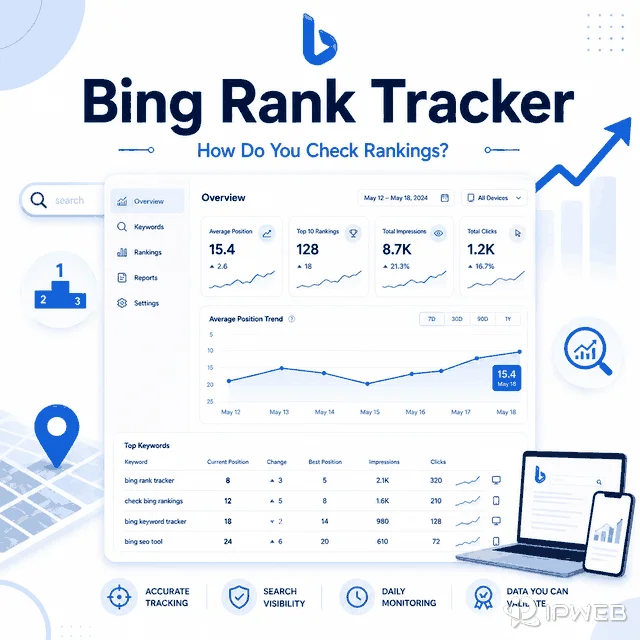
Bing Rank Tracker: How Do You Check Rankings?
Bing rank tracking is most useful when every check uses the same query, location, language, device, and URL-matching rules. A single position can be helpful for a quick check, but recurring monitoring needs enough context to explain whether a movement is real or caused by different search conditions. Quick Answer A Bing rank tracker shows where a domain or URL appears in Bing search results for a specific keyword under defined location, language, device, and date settings. For your own verified site, Bing Webmaster Tools is the first-party starting point for search-performance data. Use a Bing SERP checker for a...
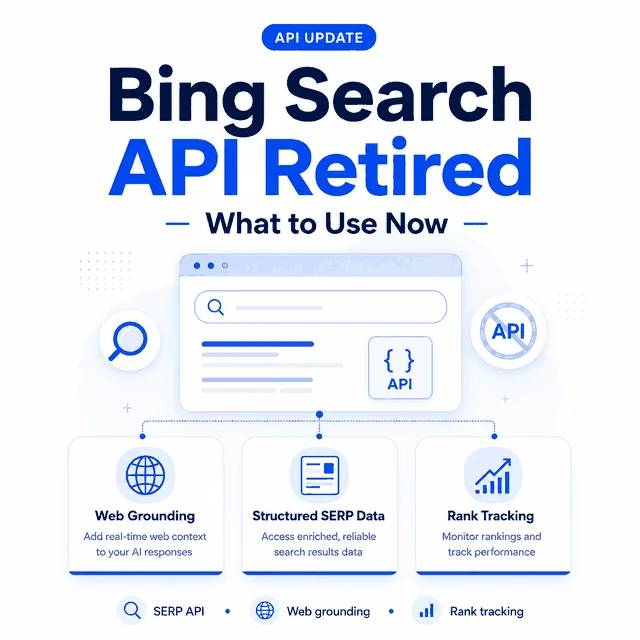
Is Bing Search API Still Available? What to Use Now
Microsoft retired the legacy Bing Search APIs in 2025, so older Web Search API keys, SDK examples, and pricing pages are no longer a reliable starting point for a new project. The right replacement now depends on whether you need AI web grounding, structured Bing result data, recurring rank monitoring, or a reviewed public-data workflow. Direct Answer The old Bing Search API path is no longer a simple "get a Bing API key and start pulling web results" workflow. Microsoft announced the retirement of Bing Search APIs effective August 11, 2025, which means teams now need to choose between current...
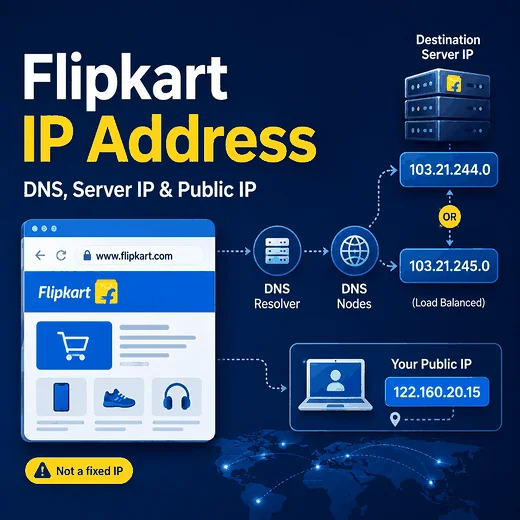
Does Flipkart Have a Fixed IP Address?
Searching for a Flipkart IP address can mean several different things: the server IP returned by DNS, your own public IP while connecting to Flipkart, an API endpoint address, or an IP used for network testing. These are different values, and only some of them are under your control. Direct Answer Do not treat Flipkart as if it has one permanent public IP address that can be copied into a configuration forever. DNS can return one or more IPv4 or IPv6 addresses for a hostname, and those records can change as infrastructure, routing, caching, or traffic-management systems change. Query the...