

Ryan
IP Proxy Research Team
Ryan is a web data and proxy infrastructure specialist focused on IP networks, scraping systems, SERP APIs, and global data access solutions. He shares practical insights on proxy usage, data collection architecture, and scalable web intelligence systems.
Ryan's Articles
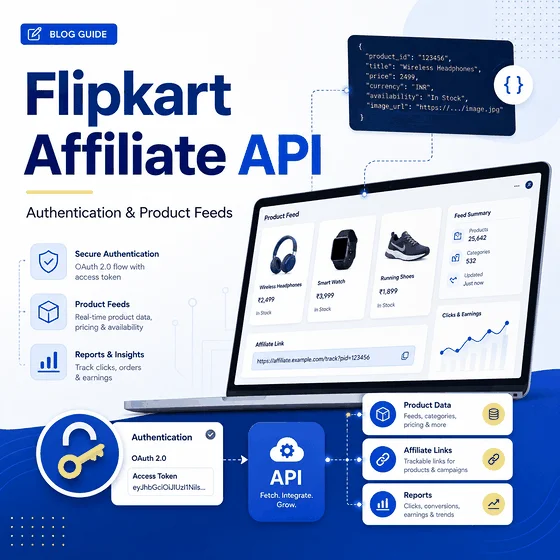
Flipkart Affiliate API: Authentication & Product Feeds
The Flipkart Affiliate API can provide registered affiliates with structured product, price, availability, seller, offer, and tracking-link data. The public documentation is still accessible, but it is old enough that you should verify API access in your Affiliate account before building a new integration. Direct Answer Use the Flipkart Affiliate API when you have an eligible Affiliate account and need approved product or offer data for affiliate use cases. Authentication uses an Affiliate Tracking ID and private API token sent in the Fk-Affiliate-Id and Fk-Affiliate-Token HTTPS headers. Start with the Product Feed Listing API, follow the current feed URLs returned...

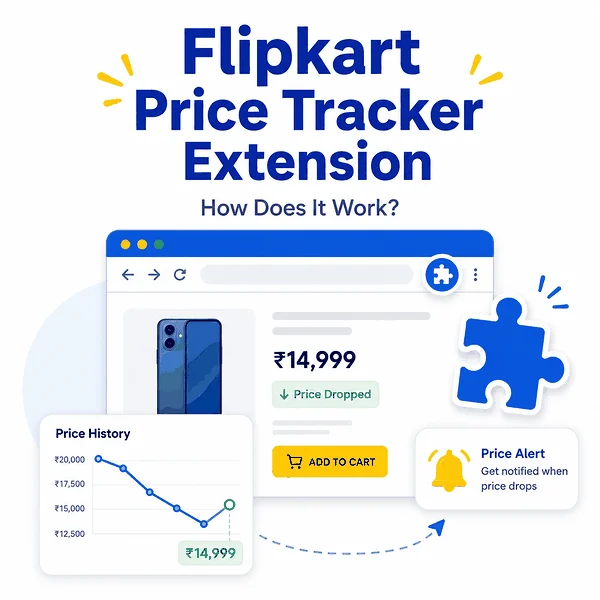
How Does Flipkart Price Tracker Extension Work?
A Flipkart price tracker extension adds price-history or tracking controls to the browser while you shop. It can make a quick price check easier, but the graph is only useful when the extension is reading the correct product, variant, seller, and offer state. Direct Answer A Flipkart price tracker extension usually identifies the product page you are viewing, reads or sends product details to its tracking service, and returns stored price history, a price graph, or an alert option. Before installing one, check the publisher, update history, permissions, privacy disclosure, supported Flipkart pages, and how the tool handles variants, sellers,...
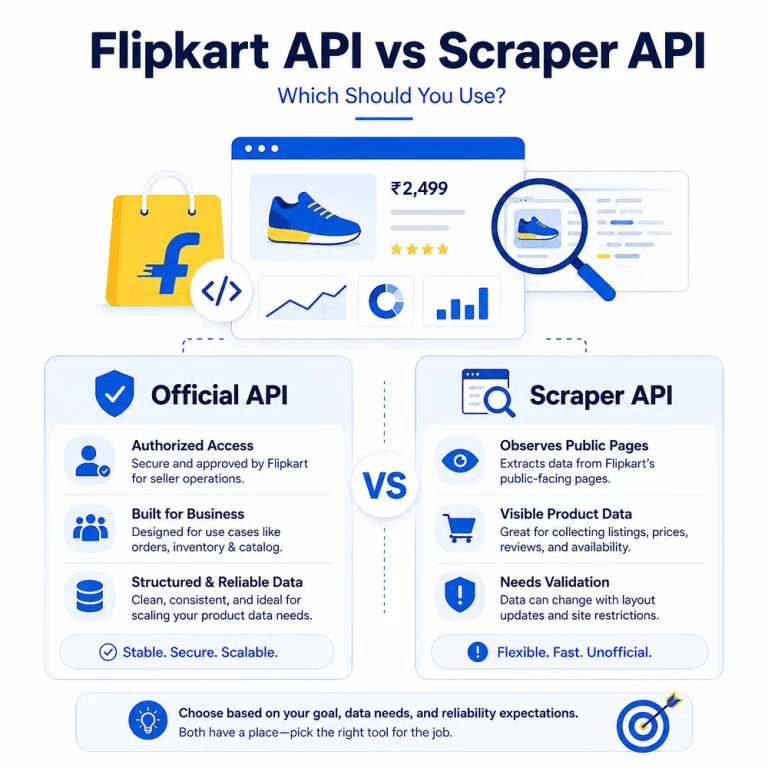
Flipkart API vs Scraper API: Which Should You Use?
Choosing a Flipkart data source depends on what you need to measure. Seller operations, catalog enrichment, price monitoring, availability checks, and competitive research do not all belong in the same API bucket. Direct Answer Use an official Flipkart API when you are an authorized seller or partner working with supported marketplace operations. A third-party data API or scraper API fits a different job. Use one only when the workflow is allowed, the source rules are respected, and the returned product, seller, price, availability, and timestamp fields can be validated. Key Takeaways The term “Flipkart API” can refer to official seller...
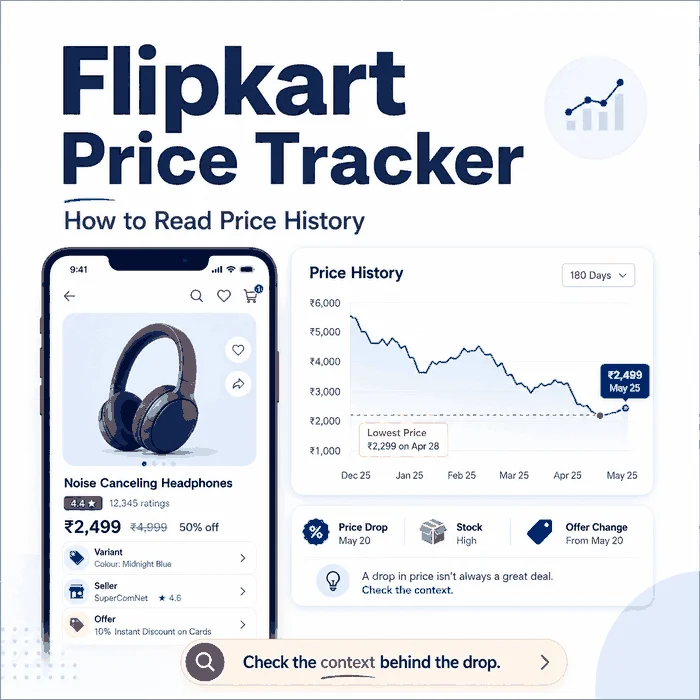
Flipkart Price Tracker: How to Read Price History
A Flipkart price tracker can show how a product's observed price changes over time, but the chart is only useful when you know what was actually compared. A lower number may reflect a different variant, seller, offer state, stock status, or delivery context rather than a like-for-like price drop. Direct Answer To check Flipkart price history, copy the product URL or search for the product in a tracker that supports Flipkart, open its historical price chart, and compare the current price with previous observations. If you set a price drop alert, verify the product variant, seller, availability, delivery location, and...
Movie API vs Public Movie Metadata: Which Should You Use?
A catalog team can have a clean movie record in an API and still see a different title, rating, artwork, or listing state on a public storefront. That is why movie API data and public movie metadata should not be treated as interchangeable sources. Use the API as the structured record. Use public-page checks when the page itself matters—for example, regional catalog QA, localized presentation, or confirming a recent listing change. Direct Answer Use a movie API when you need documented, structured fields for application integration or catalog enrichment. Use public movie metadata checks when you need to verify what...
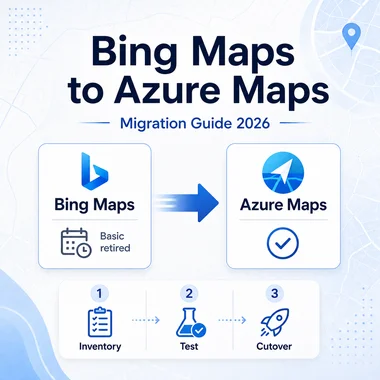
Bing Maps API Migration to Azure Maps in 2026
Bing Maps for Enterprise is already in its retirement window. Free Basic-account access has been retired, and existing Enterprise customers can continue using Bing Maps for Enterprise services only until June 30, 2028. Any application that still depends on Bing Maps REST APIs, the Web Control SDK, or related services needs a migration plan before that deadline. The difficult part is not choosing a new product name. Azure Maps covers many of the same mapping and geospatial jobs, but request formats, authentication, coordinate order, SDK behavior, and response schemas can differ. A safe migration starts by identifying exactly what the...
Proxy Scraper Sources: How to Validate Public Proxy Lists
A proxy scraper can turn public proxy pages into a large list of IP addresses and ports in seconds. The harder part is deciding which entries are still alive, correctly labeled, and suitable for your workflow. Public lists can contain stale endpoints, duplicate records, inaccurate protocol or location claims, and proxies with unclear ownership or reputation. Before using a scraped proxy list, validate the endpoints instead of trusting the source page alone. Check the source, freshness, liveness, protocol, location, duplicates, and reputation signals, then decide whether maintaining the list is practical for repeated use. Quick Answer A proxy scraper is...
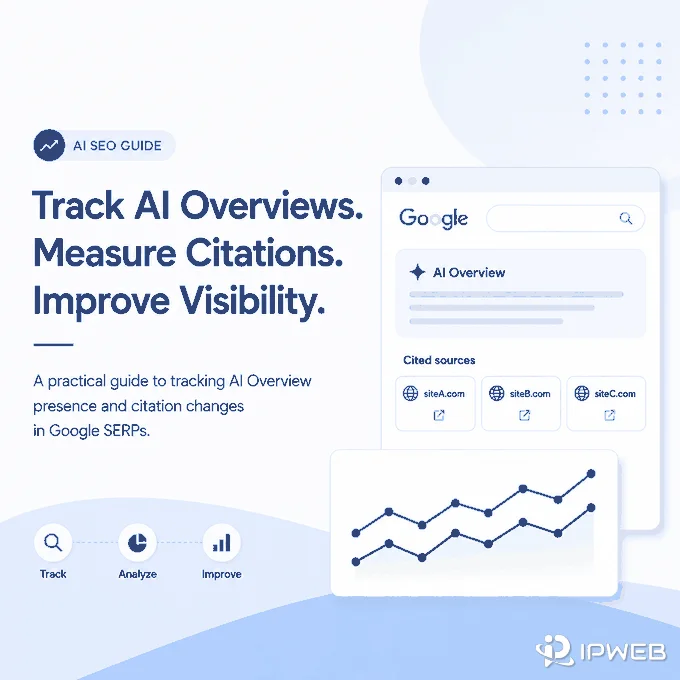
How to Track Google AI Overviews with SERP Data
Google AI Overviews can appear, disappear, or cite different sources even when the search query stays the same. A single SERP capture shows one moment, but it does not show whether the result is stable or how citation visibility changes over time. Useful AI Overview tracking focuses on observable search data: the exact query, country, language, device, timestamp, AI Overview presence, cited URLs, and surrounding organic results. Keeping those conditions consistent makes repeated captures easier to compare without treating a visible citation as proof of Google's selection logic. Direct Answer AI Overview tracking means checking whether Google shows an AI...
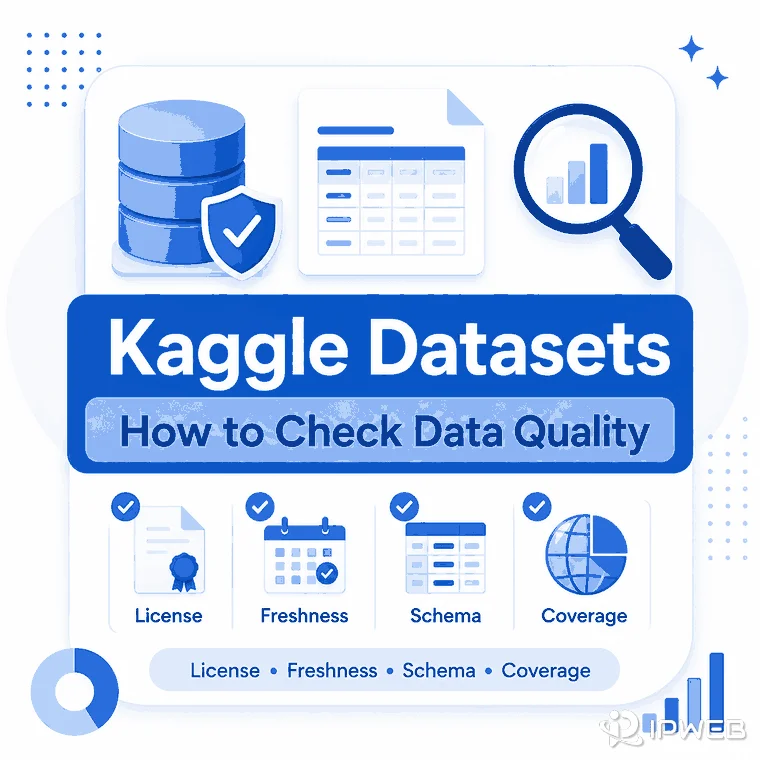
Are Kaggle Datasets Reliable? 6 Checks Before You Use One
A public Kaggle dataset can look ready to use because it is easy to browse, download, and test. But popularity, download count, or a clean preview does not tell you whether the data is current, complete, well documented, or suitable for a real business workflow. The practical question is whether the dataset is good enough for your specific job. Before using it for a model, dashboard, enrichment workflow, or internal analysis project, check its license, provenance, freshness, schema, entity coverage, data quality, and refresh path. Direct Answer Kaggle datasets are best treated as public data discovery and prototyping sources, not...
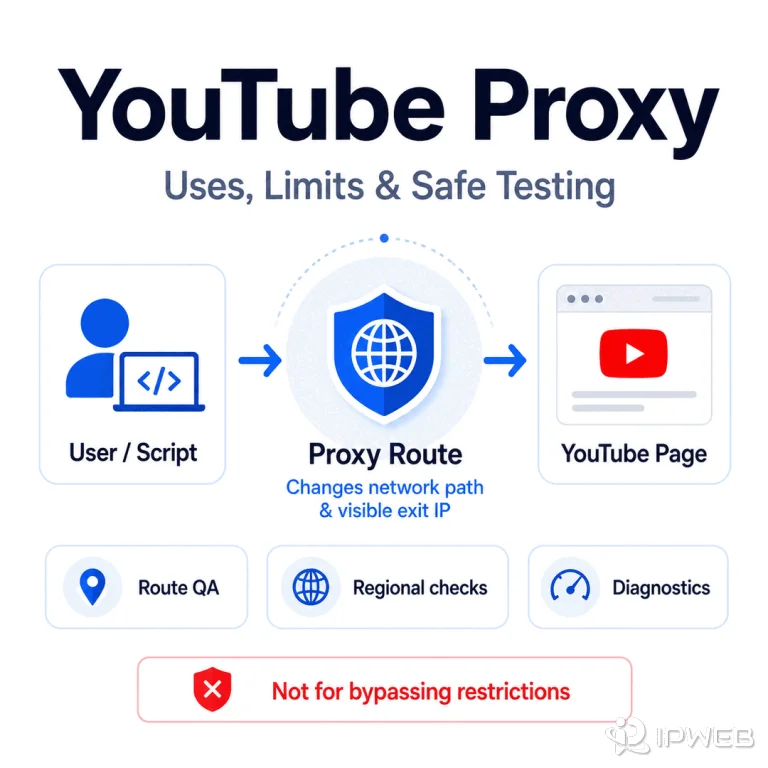
Do You Need a YouTube Proxy?
Search results for YouTube proxy terms are messy. Some pages promise access without limits, some list web proxy sites, and some treat "YouTube unblocked" as a generic entertainment query. For a business or data team, that is not a useful way to think about proxies. A safer YouTube proxy workflow starts with a narrower question: are you testing a network route, validating public page behavior, checking regional QA, or debugging a connection problem? A proxy can help with those network-layer tasks. It cannot make private content public, change account rules, remove API quotas, or override school, workplace, legal, or platform...
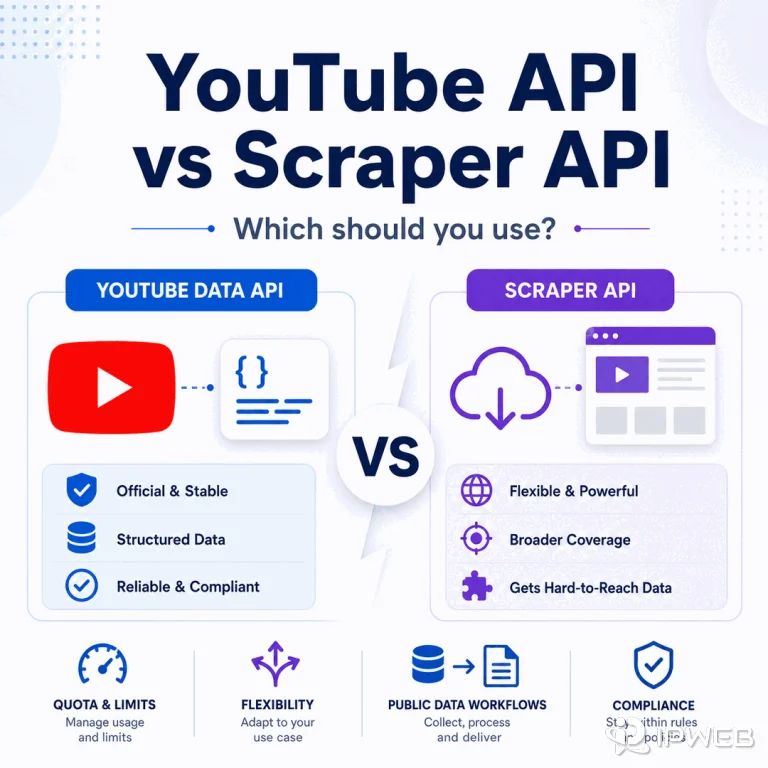
YouTube API vs Scraper API: Which Is Better for Your Workflow?
When a team says it needs YouTube data, the next question is not "Which script should we run?" It is "Which source is the right source for this job?" A reporting dashboard, transcript enrichment task, public video monitor, and search-result research workflow can all need different levels of structure, quota control, and validation. The safest starting point is the YouTube Data API. A scraper API or custom Python workflow may fit when the job needs browser-level collection, public page checks, or a workflow that the official API does not model well. The decision should be based on data type, permission,...
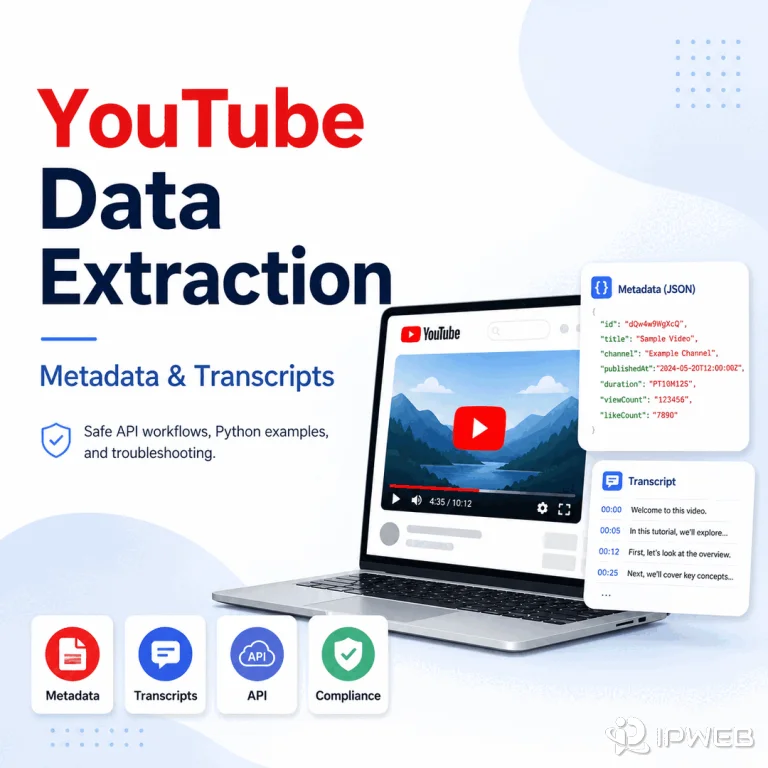
How to Extract YouTube Metadata & Transcripts with Python
If your data workflow needs public YouTube information, the hard part is not only getting a response. The harder part is knowing which data you are allowed to collect, which source is reliable, why an API call failed, and whether a proxy is helping with a real network problem or just adding noise. YouTube data extraction should be treated as a controlled public-data workflow, not as an access workaround. The clean path is to use official APIs or authorized sources for metadata, check transcript or caption availability carefully, validate IDs and quotas, and keep proxy use limited to routing checks...